

THE INTERVIEW
Tobin Rowland
1. Could you share a bit about your background and what led you to start your art practice?
When I was a kid, I got into photography and I wanted to pursue it in university. I thought I was going to get into design and commercial photography, until studying fine arts opened up new art forms for me, and I've been exploring new ways of creating art ever since.
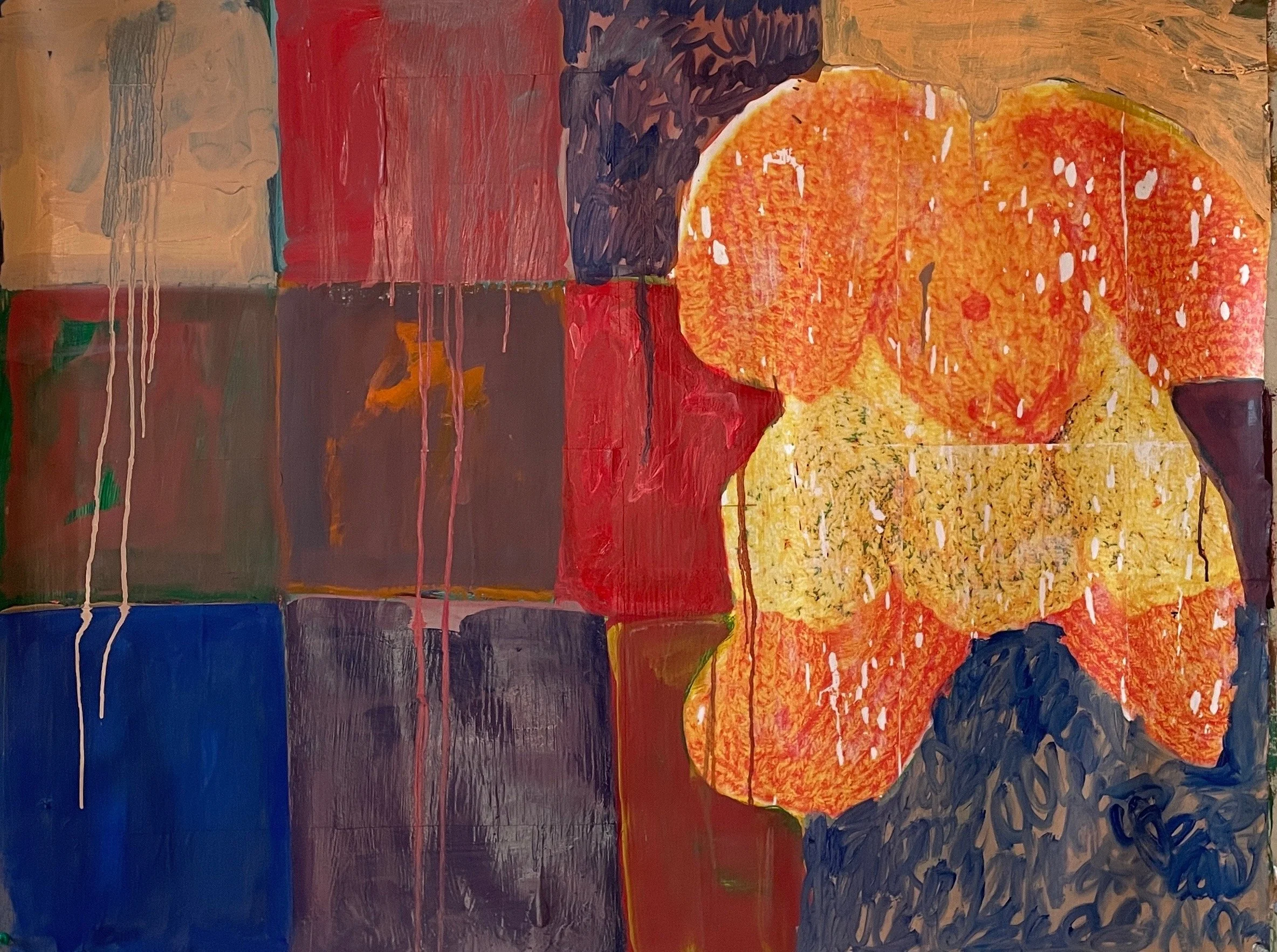
The through line from then to now is always having an interest in communicating and creating some form of connection between myself and others—that's the point of all my work, I think. That impulse to connect is what continues to encourage my practice. I'm particularly interested in how familiarity, memory, and materiality can evoke emotional responses in viewers. By combining photographic elements with other mediums, I aim to create work that feels both intimate and tactile.
All I want my work to do is make viewers feel seen, invited into the work, and encouraged to reflect on their own experiences. I want my work to reach outward, and I feel with my practice of creating imagery in a tactile way, it creates another level of connection.
2. What themes does your work explore?
The most common theme is connection. I guess that's sort of the umbrella term, and then every other theme you might find in my work is under that umbrella. Every gesture or suggestion of any aspect in my work is motivated by always wanting to know how the viewer relates to what they are seeing, and the connection that forms in that moment between them and me.
I want to explore what connects us all—things like home and love and relationships—and in that, more precisely, comes sentimentality: things that we are attached to. Tchotchkes and trinkets adorn the canvas and represent things that I cherish. One might also find a way to connect themselves to such simple yet deeply meaningful things that they have in their own lives.
Q: Can you talk about your process for selecting the objects and materials that appear in your work?
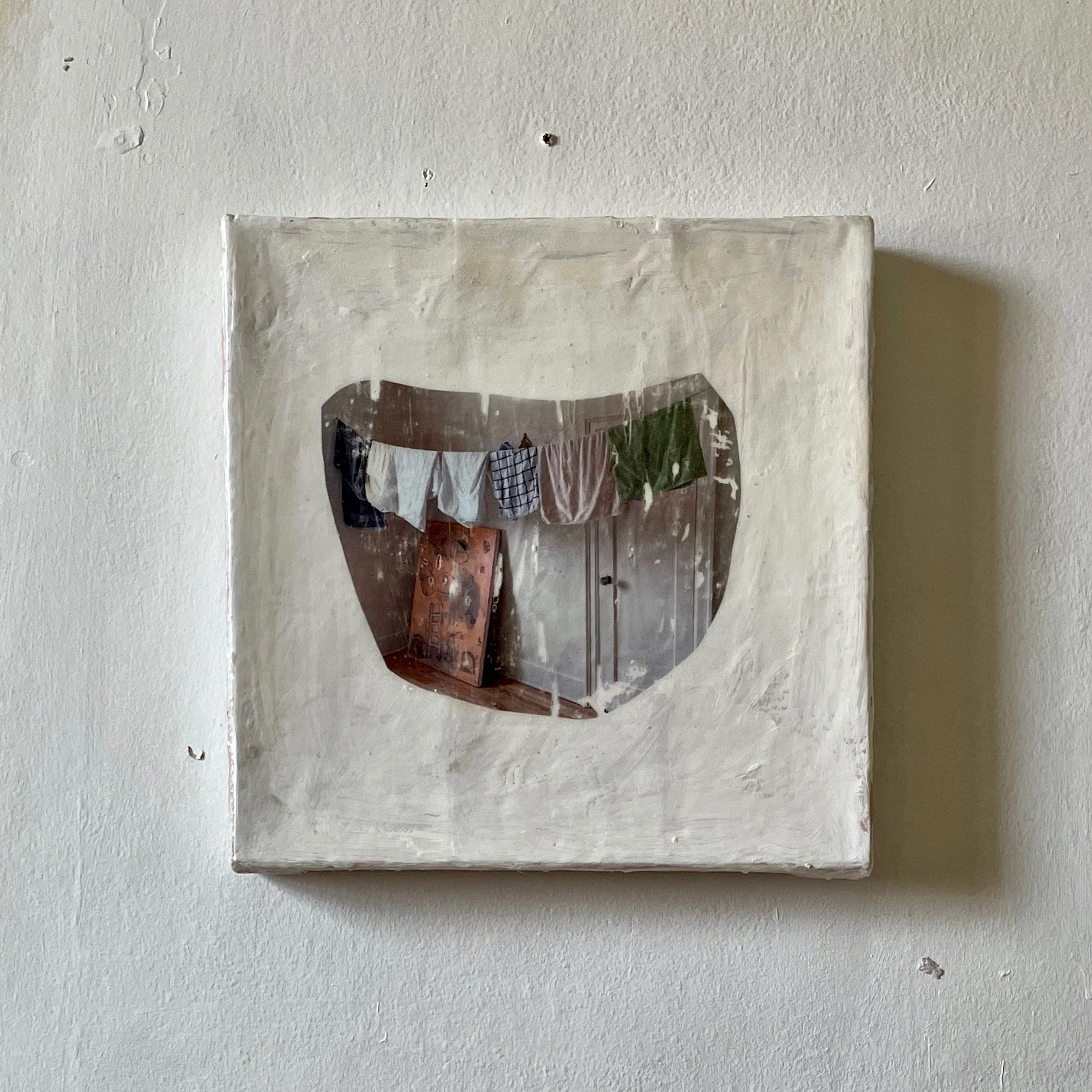
That selection process is quite fluid. There are so many objects to choose from. I think when I single out an object, place, or anything I choose to photograph for my work, it stems from opportune moments—catching typical scenes and mundane objects that are becoming glorified in some natural way, like the light hitting them in an unseen way.
For things such as tchotchkes, I think they embody the idea of some small, mundane objects or moments in the larger scheme of the home. To notice a moment that becomes striking to you, to photograph it and want to share it, is when it's worth appearing in my work.
Things or moments that seem fleeting, transient, or fading, feel especially important to notice and capture. From there, I choose which moment is best suited for the painting I'm working on, or worth starting a new work about—’worth’ meaning that I feel I can offer something meaningful for the viewer.
3. How has your work evolved over the years, and what has influenced those changes?
I think my work has just become more vulnerable, and I hope it continues to become even more so in the future. If you present your vulnerability first for the viewer, it's easier for them to trust and expose their own vulnerability. This is just influenced by my own life experience and growth. I want to know myself more and understand who I am and how to be a better person to myself and others, and I think that creating and sharing art is a major part of that, among other things.
Showing my work to others and having them interpret it helps me understand how people see things differently than I do and provide a new perspective, and vice versa.
4. What is the biggest source of inspiration for your work?
Just sharing experiences with people and being a part of my community—wanting to grow and create and share. To speak more on that, I feel like we often go through growth and change alone, and I want to create an opportunity to bring others in and be able to host those conversations and share our thoughts.
The constant inspiration I feel to create is to see what will be at the end of the work—what's on the other side of putting in the work to create something—not that the other side is any means of being finished, but it is a jumping-off point to start a conversation that can continue to be had. I guess another part of my inspiration is fear of not talking and sharing with others. To me, everything would be pointless if there is no constant attempt at trying to find new perspectives.
5. What is the most challenging stage in the creative process for you and why?
Probably knowing when to stop working on something—there are very few paintings that I've been completely satisfied with. I'll finish a painting, but I always want to come back to it and touch up or add or take away something. It's like a living object, something that can always change. I feel my opinions can change quickly, which is certainly not a bad thing, but it can make finishing something impossible. In a way, I kind of like that though—it's nice to not be finished and to always be looking at something in a new way.
It’s like an ongoing negotiation that keeps the work alive and unresolved, and it reflects how my relationship to the work, which could be seen as a relationship to myself, is ongoing and evolving all the time. I always hope when I'm creating that my work feels like a living object with no conclusion to the viewer, and I hope they can see themselves in that too.
6. What is the project you’re most proud of to date?
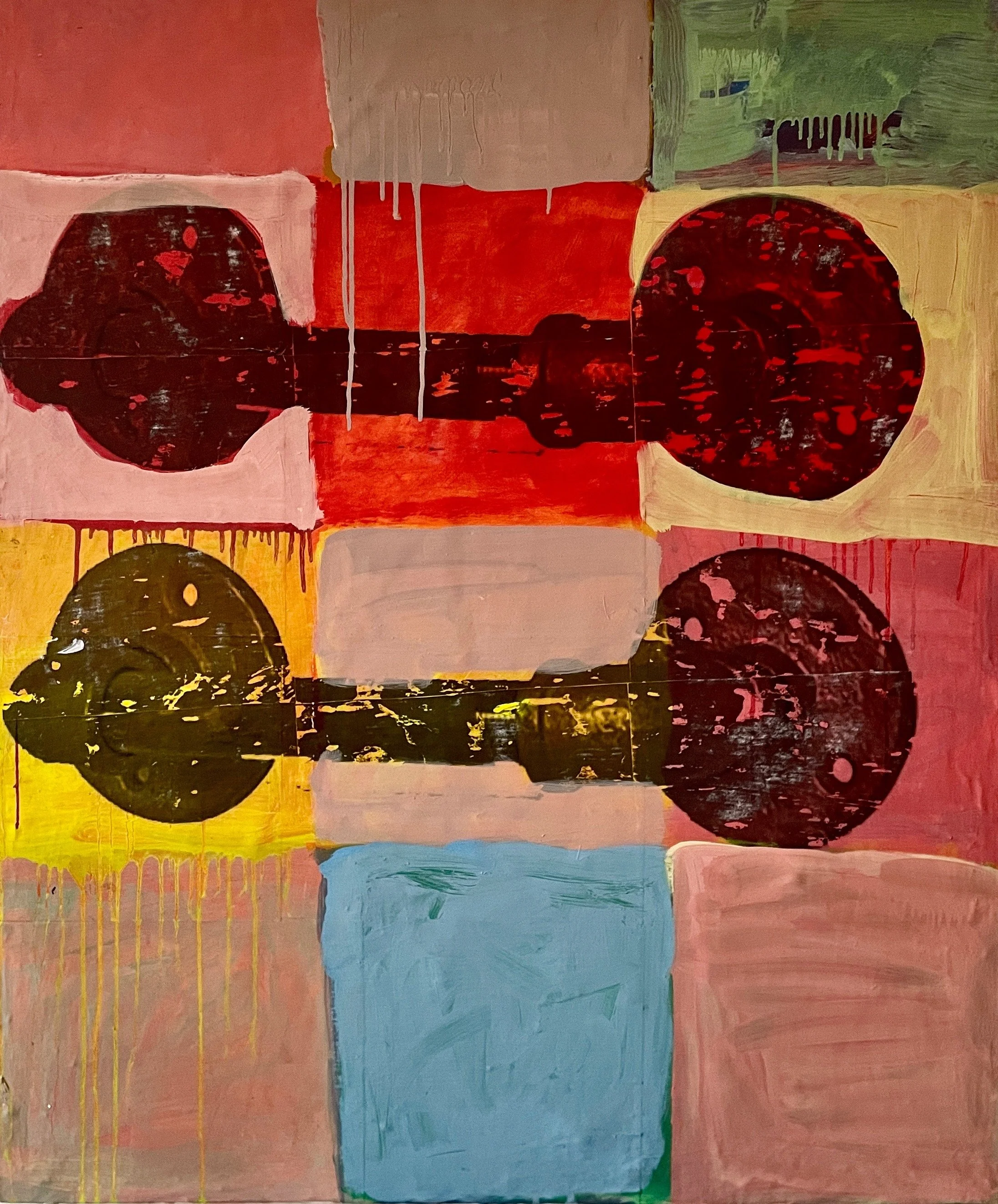
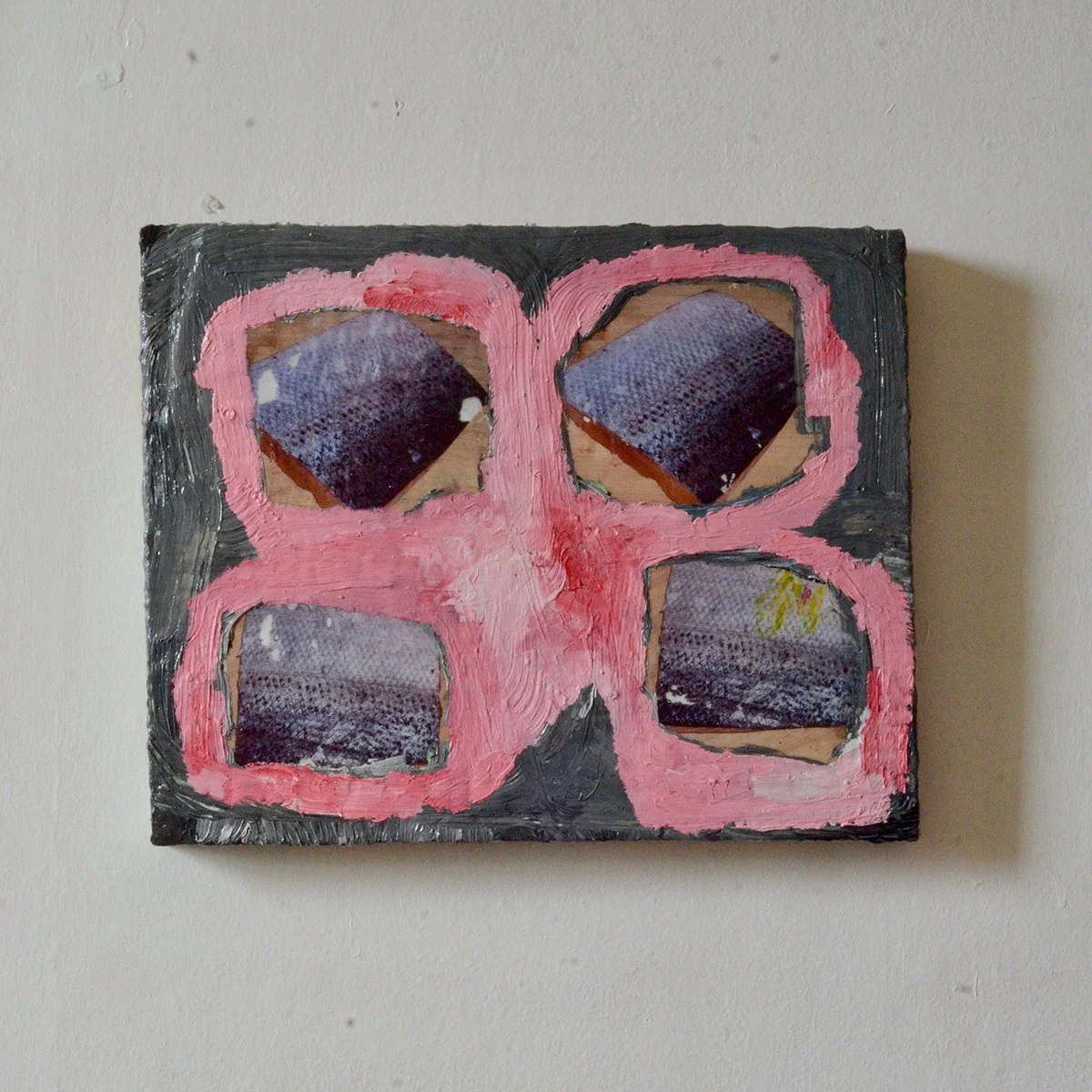
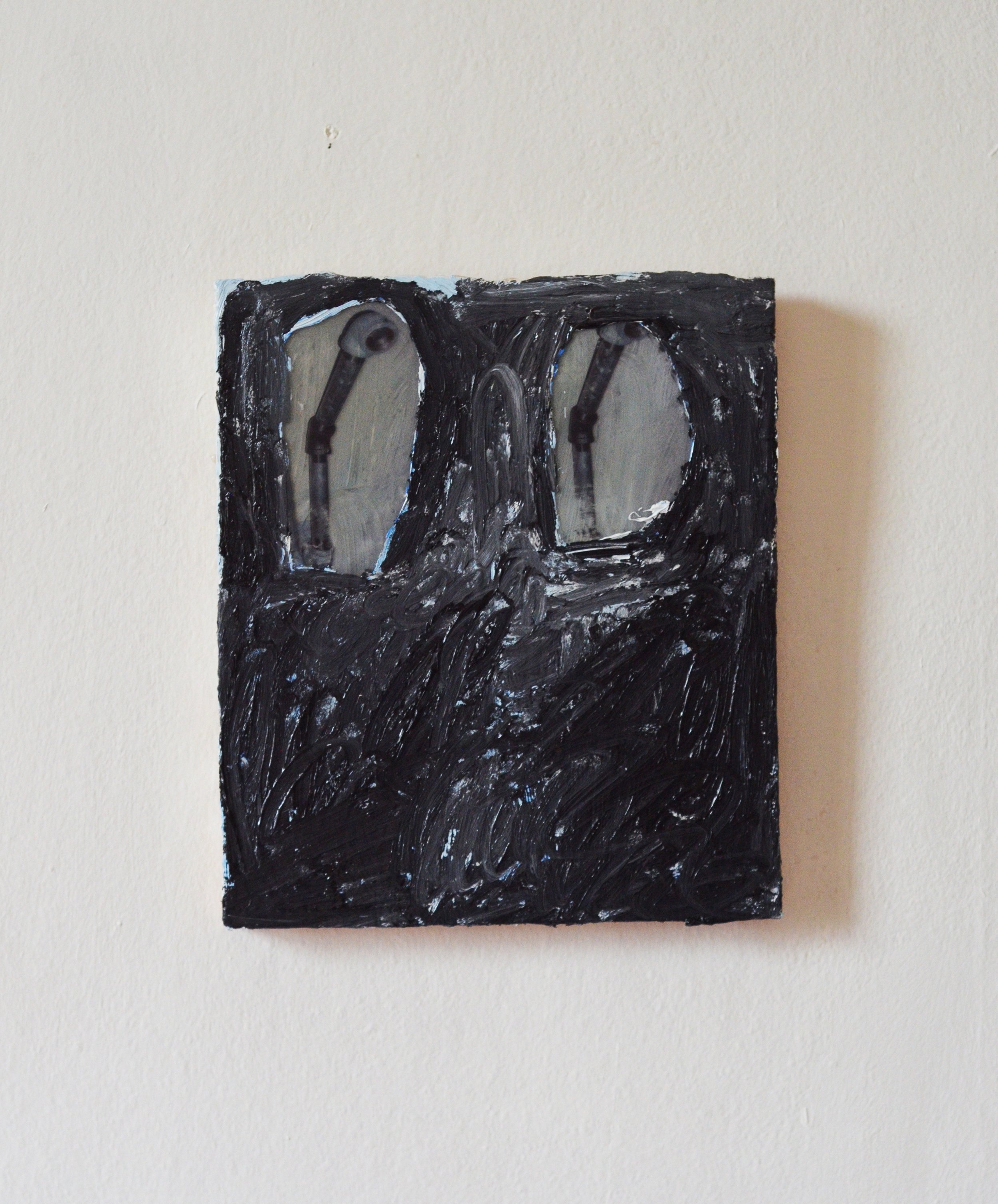
I have this one painting called Seeing Double that I made in 2023. It's my favourite—one of the few that I knew was finished. I don't think that I can ever part with it. I don't know why; I think maybe because it was my first successful attempt at combining image transfer and oil paint in a way that was satisfying. Also, I just think it's beautiful.
The images are of galvanized pipes, which I've always found a way of including in my work. I started using them in my final year of university, and I've just formed a relationship with them—they’re familiar to me now. The images in the piece are a pair of pipes jutting out of a wall. They are symmetrical, which draws the mind to think of them as eyes, making it feel like the work is looking back at you.
I also just opened a show at the gallery aceartinc. with my friend Skye Callow that we put an immense amount of work into. The show is called Constructed Image. It offers a glimpse into the practices of Callow and myself, placing our work in direct conversation for the first time. We both focus our practices on contemporary photography, process, and experimentation, investigating formal aesthetics alongside the conceptual capacities of images.
The exhibition asks what dictates beauty within contemporary visual culture and what determines whether an image is considered valuable or real.
7. Do you see yourself staying in Winnipeg long-term, or are there other cities that inspire you to work there?
I love Winnipeg, but I'm definitely open to travelling to create new work—that is something I haven't done before and would love to experience. As my work is such a reflection of myself, I feel like it would definitely change, of course. Being in a new city and having to create new relationships, jobs, and familiar pathsmy work would naturally shift with that. But I don’t think that me leaving Winnipeg would inherently improve or hurt my work; it would just change, as things always are.
8. Do you think your practice would look different if you were based in another city?
If you were to put me in a different city right now, my work would look the same. But since traveling for work is something that would happen in the future, I'm sure my work would look different than how it does right now. I guess my work will keep changing over time regardless—it doesn't really matter where I am.
9. What would you like to accomplish in the next few years?
Just to continue to create work—to have the opportunity to create as much as I can and be a part of as much as I can. I hope to see my work grow in new directions and my interests become a little more honed in. I am very excited for the future and for what is to come.
10.If there’s one thing you hope people take away from your work, what would it be?
It's easier to find something in common with someone than it is to not. I want to create a space to slow down, and hopefully find shared moments of connection, especially in such vague and unfamiliar imagery that is mostly just suggestions of things. Through that, I guess the end goal would be some reminder of humanity in the mundane moments of everything.