




THE INTERVIEW
Sapphire Moon Moroz
1. Could you share a bit about your background and what led you to start your art practice?
I was born and raised in Winnipeg, in Wolseley, the neighbourhood I still call home. My parents were embracing hippy and new age ideals at the time I was born—hence my name—and they homeschooled me until third grade. I spent most of my early childhood being creative, constantly drawing, painting, and imagining, and my family was always very encouraging.
Becoming an artist was the first thing I ever wanted to be. I strayed from that dream while I grew up, and when I wasn’t sure what to pursue, I definitely felt my child-self guiding me to study art. I know art school isn’t for everyone, but for me, it was a really good place to grow. I graduated from the School of Art at the University of Manitoba in 2024, and since then I’ve been working in galleries and museums throughout Winnipeg as an art handler and curator/manager. Even when I'm not in the studio, I feel very close to the art community through my work, which I’m grateful for.
2. What themes does your work explore?
I’m most interested in exploring memory, intimacy, privacy, heritage, and sexuality. Currently, I'm working with art as a means of preservation. I’ve always understood painting something as a way to make it last, which is why I've always loved portraiture. For so long, paintings of people were all we had, and to be painted meant you were ‘important.’
When I was younger, all I wanted was to be a portrait artist, and I still somewhat identify as one, even if the portraits might be unconventional. Through being the subject of my own artwork, as well as those dear to me, I not only preserve myself and document my story, but also the history of my family and the people I love. Having grown up in an all-female household, I feel very connected to the women before me, and I am most interested in telling their story within my practice.
Now, I’m trying to explore more of my Slavic cultural heritage and ancestral history through both portraiture, pattern, and embedding folkloric elements into my work.
3. How has your work evolved over the years and what has influenced those changes?
I feel like it’s changed a lot. I have been painting since I was a child, and I went into art school wanting to be a painter. But the great thing about art school is that they encourage you to try other things. I took open media classes, installation classes, and sculpture classes, and they opened my mind to how my work, and painting itself, could be more than painting.
Working with found materials and my own personal and familial archives really changed the course of my practice.
Before that, I was making a lot of work inspired by religion and horror, with lots of nude figures and gore. These are both themes that I love and that continue to inspire me, but sometimes I would find myself anxious or embarrassed to show off my work or present it for critique. I’ve often said that if I didn't have to stand next to my work in critique, I would make very different work. But I think critique does make you aware of how your work should represent you.
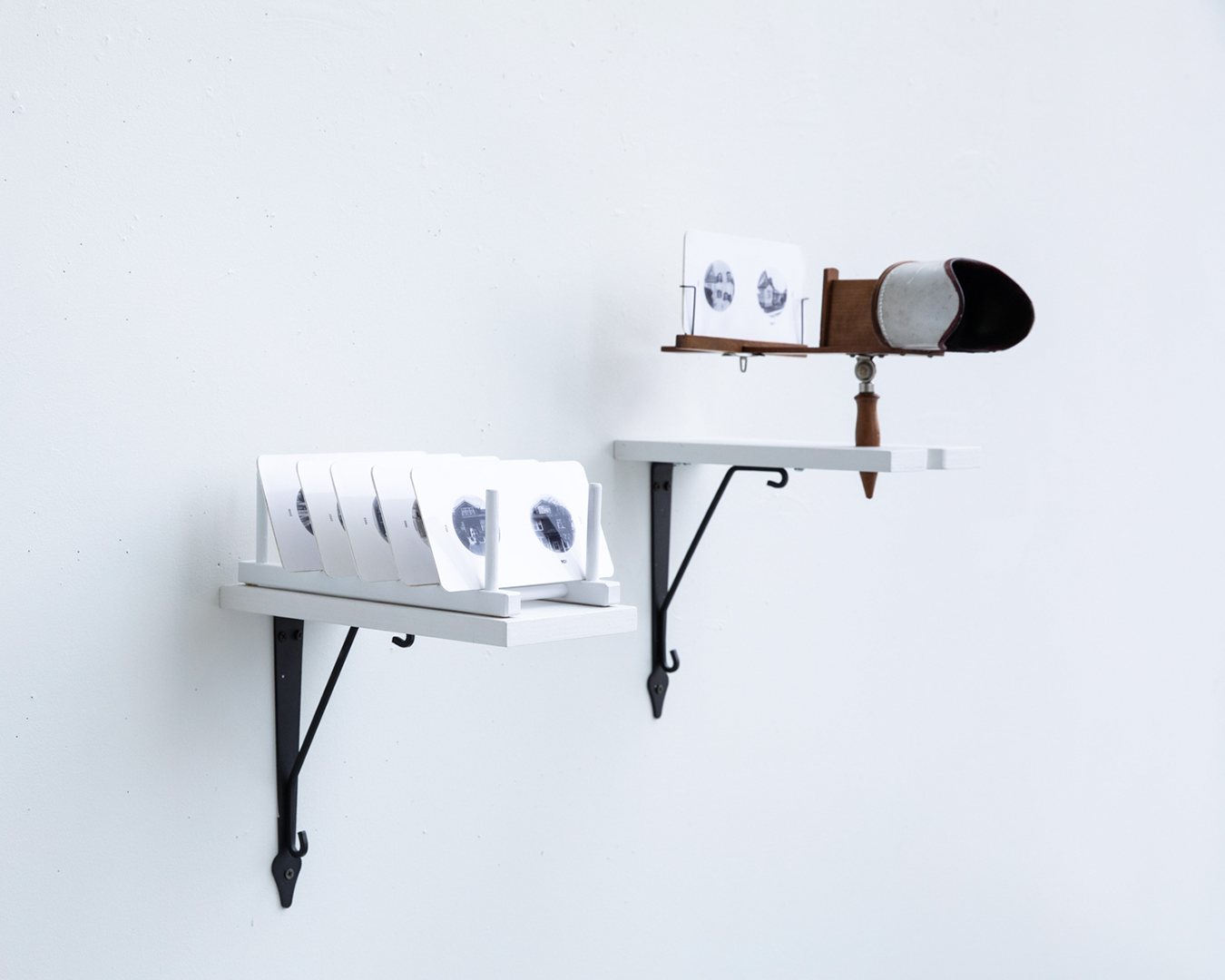
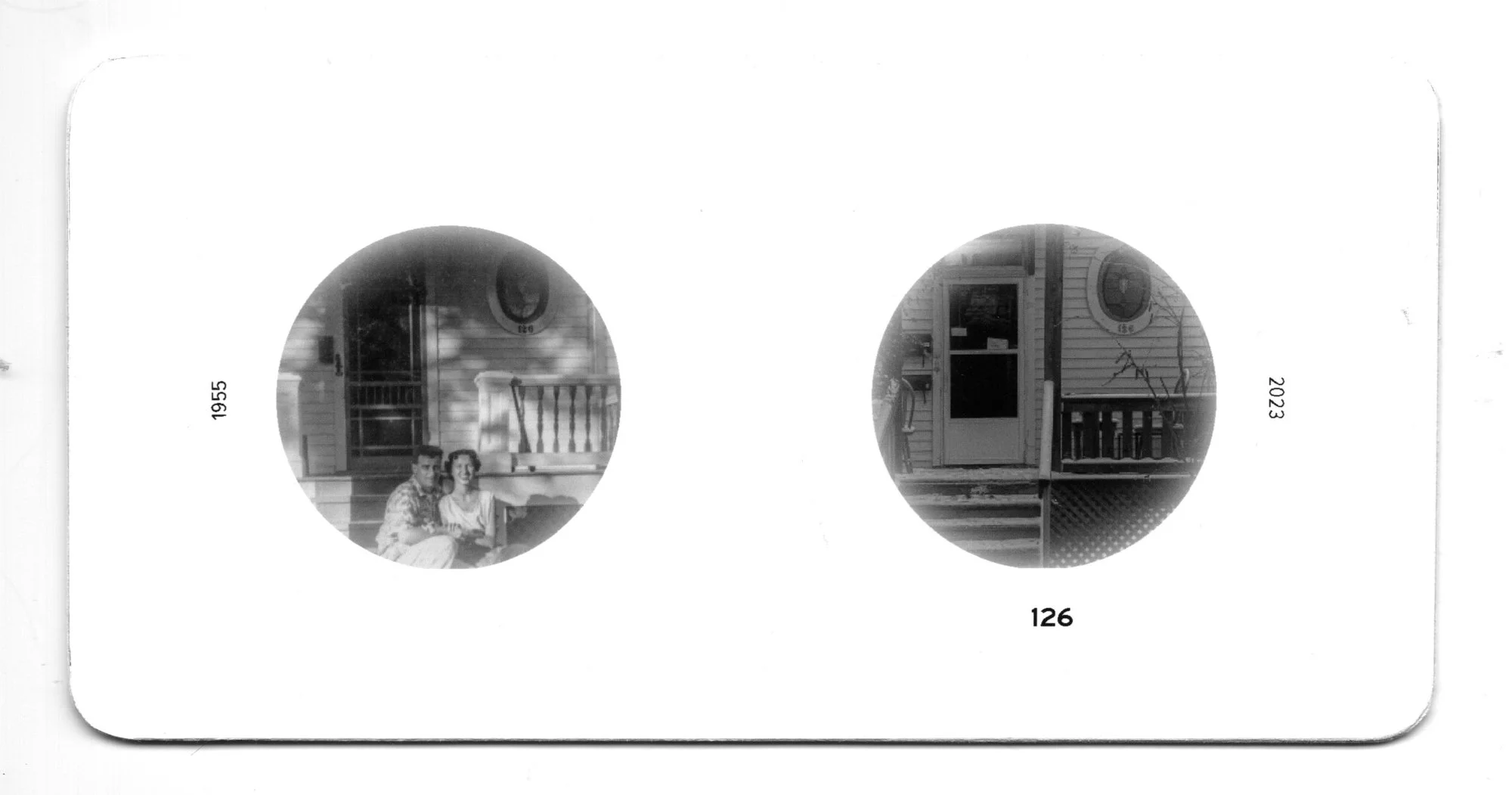
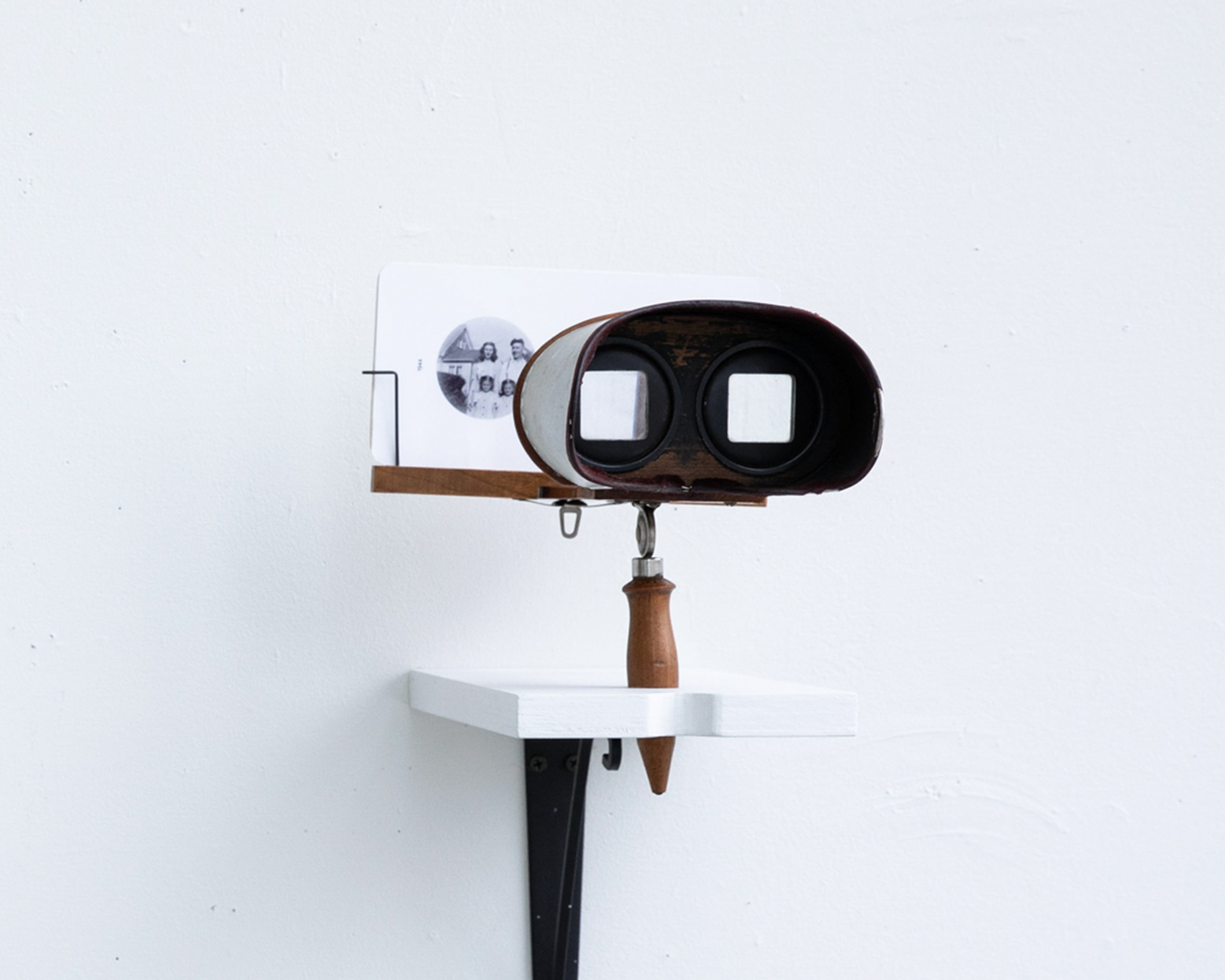
When I went into my honours year of my BFA, I was trying to figure out what route to pursue, because the aim is to develop a body of work to show at the end of the year. I was thinking about sexuality as a powerful theme, but I also craved to make art that was beautiful and approachable. From this, I created a body of work titled Peep Show, which was concerned with the interactive element of pornographic peep shows, but instead of nudity, the pieces revealed moments of personal and domestic intimacy. In these works, I hoped to create pieces that were aesthetically beautiful, but still unsettling, as the viewer was forced to trespass upon my private world.
These works were still largely painting- and image-based, but I used sculptural inlays or viewing devices to make my paintings intentional to interact with. So the artwork itself becomes more intimate, moving the viewer from a passive experience to an active engagement.
4. What is the biggest source of inspiration for your work?
My biggest inspiration is art history; almost everything I do is grounded in the study of painting, primarily in the scope of portraiture, still life, and history painting. I’m interested, too, in how these concepts evolved through the invention of photography. I'm obsessed with the female image and how it's evolved over time. One of the strongest influences on my work is that I grew up around museums. My mom used to manage an open-air prairie village museum that had around twenty historic buildings on its acreage. I grew up within this simulated pioneer village, helping her with artifact displays inside these buildings, and I became fascinated with old objects and the portrayal of domestic life.
In my own career, I’ve been working in heritage museums here in Winnipeg as well. Historic house museums have impacted my view of everyday moments and objects as important artifacts, and I draw on this experience both as a source of information and inspiration. I see my art as an archive of what is most dear to me, similarly to how a home is full of heirlooms, photographs, and memories.
5. What is the most challenging stage of the creative process for you and why?
The most challenging part of my process is definitely figuring out what I want to create. I do a lot of thinking, reading, and mock-ups before I even start on the final piece. I like to plan everything out in advance, and my time in the studio is more akin to fabrication than experimentation.
I often wish I was more of a process-based artist; my process is very regimented and maybe not as free as I would like. I think that’s something that just comes from who I am. I'm a perfectionist, so for me it's more about figuring out what to make than how to make it.
6. What is the project you're most proud of to date?
I'm very proud of my work Mirror (looking at you looking at me). It is a self portrait painted on the
backside of an antique standing mirror. The work stands in front of a mirror mounted to the wall, and through the use of reflection and peepholes in the place of my own eyes, the viewer sees their gaze staring back at them. When I started theorizing the piece, I wanted to create a portrait wherein the viewer’s interaction would change the image.
In my research, I became fascinated by carnival cutouts, where the iconic face hole is cut out of the figure for the insertion of the viewer’s head. However, I was frustrated with how the participant cannot see their interaction with the painting, which is why these are customarily used for photo-ops. Instead of an outward, entertaining action, I wanted to create an inward exchange between the participant and the work, which is when I thought about reflecting the image—and the viewer—through a mirror.
Because the mirror is linked to self-image, I decided to paint myself looking at my reflection. I also used the familiar structure of a bedroom standing mirror to associate the piece with private domestic space. I enjoy how this painting cannot be truly looked at without the viewer interacting through the peepholes. Mostly, I like the act of subversion: how the viewer assumes the role of the vulnerable sitter, but their gaze also doubles as an intrusion into the intimate portrait as their own eyes reflect back at them.
7. Do you see yourself staying in Winnipeg long term, or are there other cities that inspire you to work there?
It's hard to say. I've grown so fond of Winnipeg. When I was younger, I wanted to leave this city so badly, but I didn't end up leaving, and I’m grateful that I’ve grown to see more sides of it. Of course, I love this city because I love being around my family and the people that I love. But, I also really love the art scene here. Working in galleries has made me feel very close to the art community, and it always feels exhilarating being downtown and going to my studio because I’ll run into so many people that I know, and it feels like everyone is right there. I would like to experience an artistic community elsewhere, perhaps for further education in the future.
Honestly, I've rarely gotten away from Winnipeg, and I've never been outside of Canada. I do hope and crave for some exploring, and I’d like to experience living elsewhere, but I don't think Winnipeg is a bad place to call home.
8. Do you think your practice would look different if you were based in another city?
Definitely, because I would be a different person if I—or my family—were from anywhere else.
My mother dreamed of moving elsewhere when I was young, and I often wonder what our life would be like if we hadn’t stayed here. I wonder, too, about all the different people in my ancestry who had to end up in Winnipeg so that I would be born here.
I think if I didn’t grow up where my parents’ families were formed, if I didn’t get to spend as much time with my grandparents, or if I couldn’t see the first homes of my ancestors when they immigrated here, I definitely wouldn’t feel as strong of a connection to my family or my heritage. I think that would impact both myself and my work greatly.
9. What would you like to accomplish in the next few years?
I don't like to set long-term goals because, although I would like to plan my life, I am constantly reminded that life doesn’t work that way. But, I do want to pursue more education outside of Winnipeg, and I’d like to get out of the country. I'd like to make more art that I’m proud of, and I’d like to find and maintain balance in my life.
10. If there's one thing you hope people take away from your work, what would it be?
It would be nice if people remembered it. One of the reasons I make work that's semi-interactive is because my favourite memories of visiting galleries or museums are made when I have interacted with something or entered a space. Intentional actions create an experience, which creates a memory, and I would love for my work to do that for other people.