

THE INTERVIEW
Savana Sirtonski
1. Could you share a bit about your background and what led you to start your art practice?
I mean, I’ve been doing art since I was a kid, so I was always interested in it.
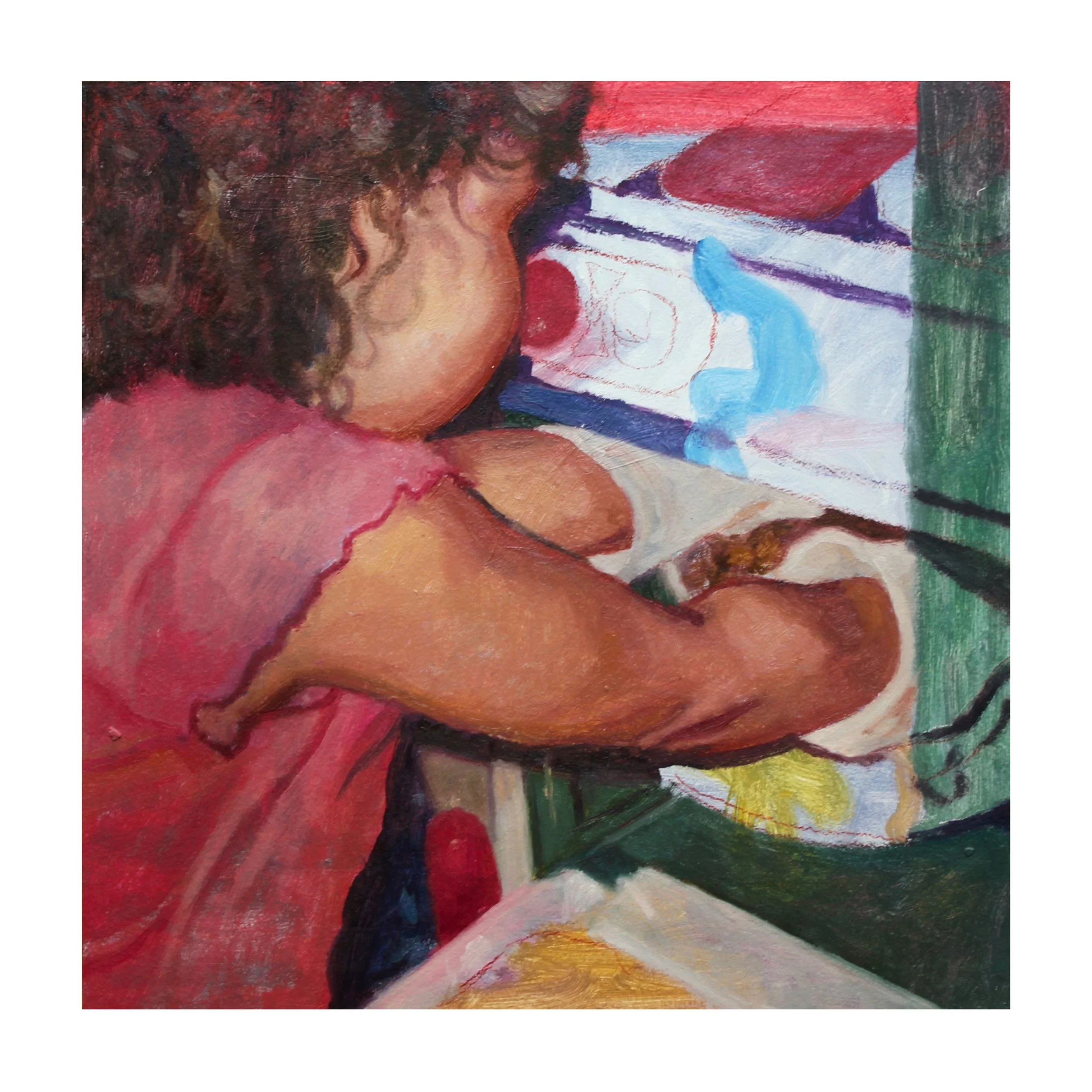
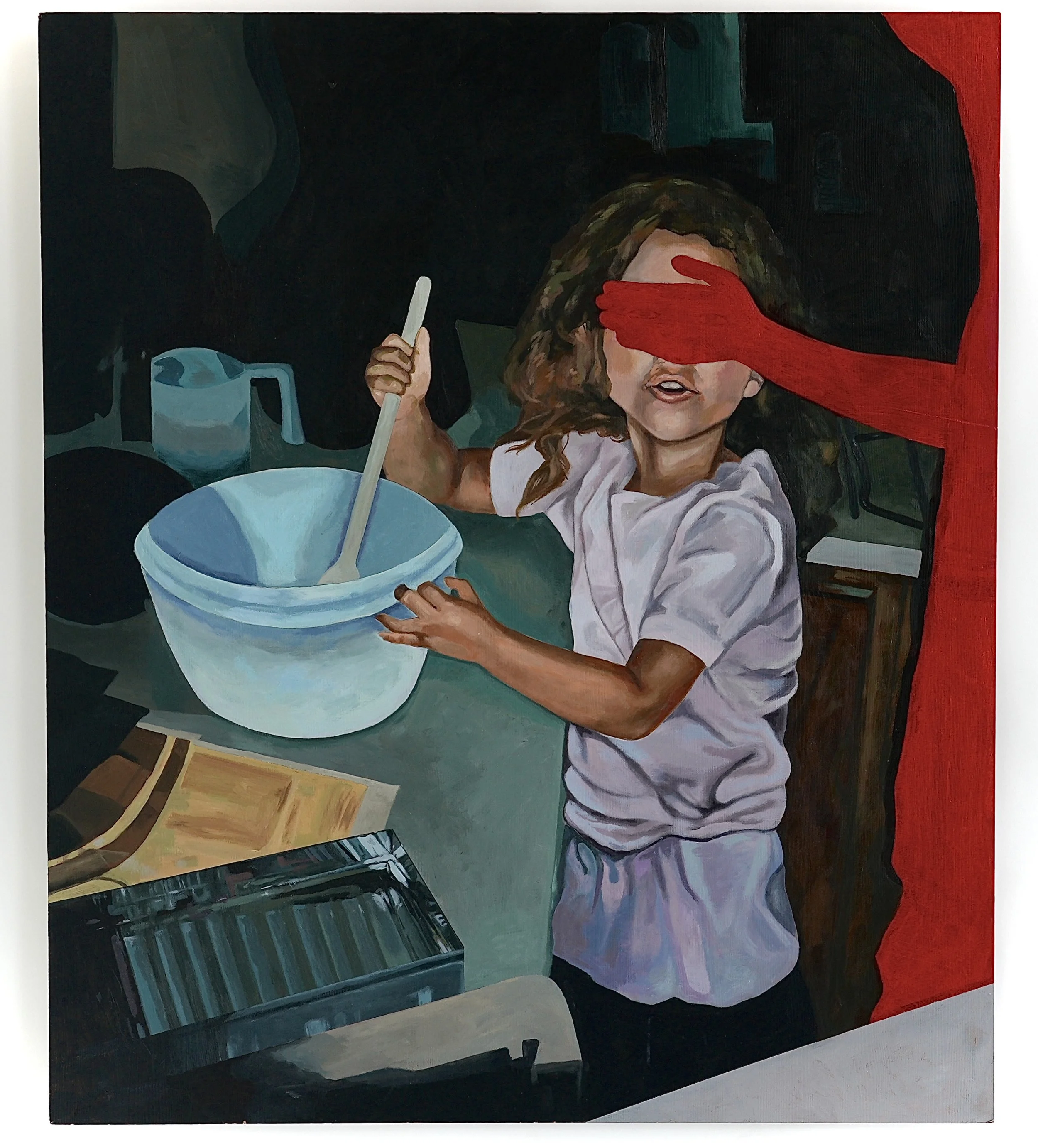
I remember my dad was always drawing. As a kid, I have a really distinct memory of going downstairs in our old house and seeing the whole room was dark, but he had a little desk lamp lit up. He was hard at work drawing a portrait of my mom as a gift for her, and it was such a beautiful portrait. Or times where my little brother and I would ask him to draw us, and we would pose excitedly. Those memories always stick out for me. I think that’s why my art practice started with portraits and evolved into doing portrait commissions.
I guess I’ve always wanted to do art and be involved in it, but I wasn’t initially going to go to school for it. I wanted to do science, and then—I don’t know—I was taking some art classes as electives in university, and after some long conversations with instructors, I pivoted.
I’m really happy I did; it expanded my art practice a lot. I just completed my BFA at the University of Manitoba in June, and I do plan on going back to school for something science- or chemistry-related, so it all worked out.
2. What themes does your work explore?
I have a hard time defining themes within my art. I would say that I’m thinking about dreams, memories, and reflections a lot, as well as pre-emptive grief and mourning.
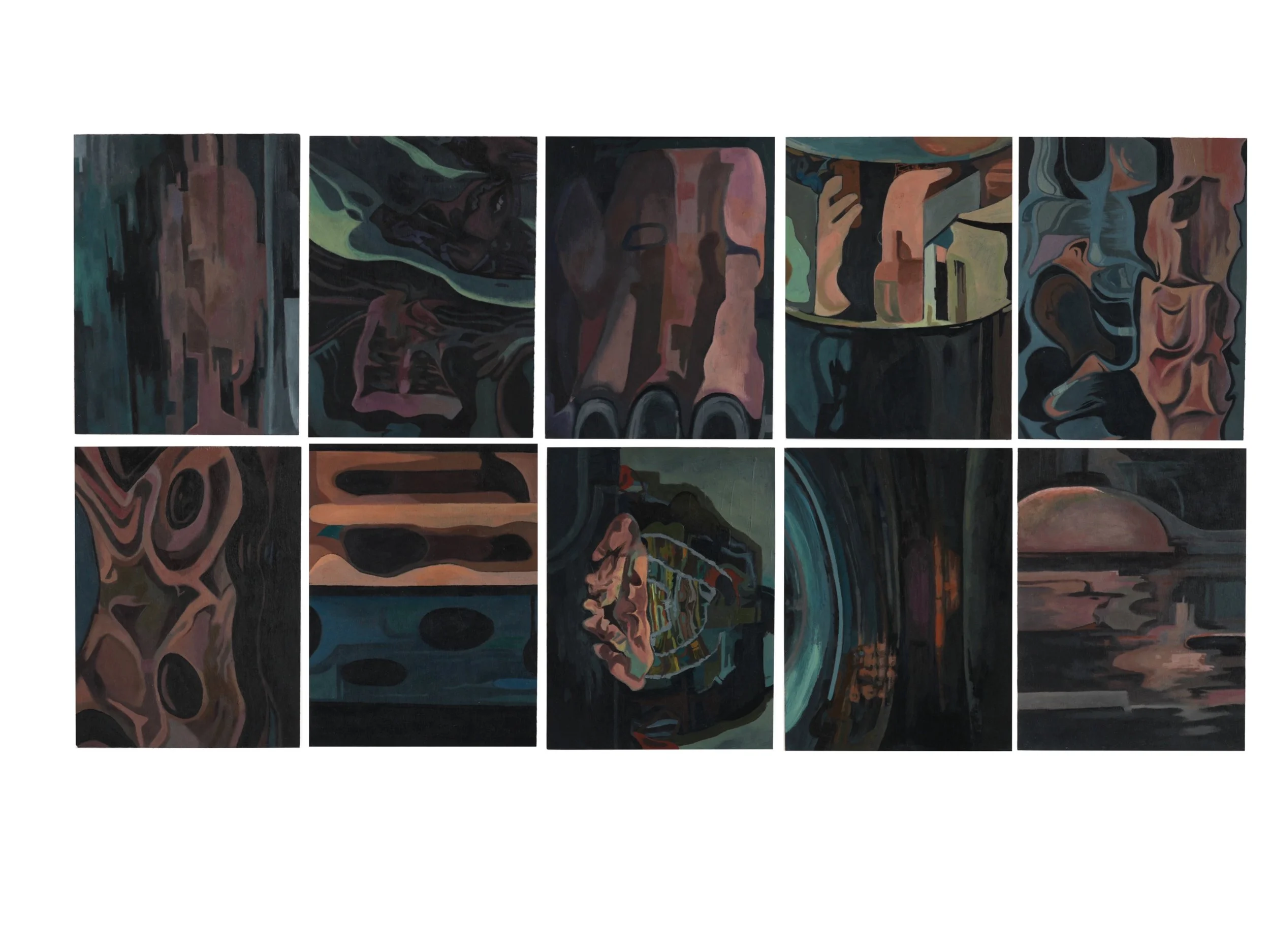
I really like reflections. I did a series of self-portraits in abstracted, broken up reflections that I really, really loved. I like the idea of reflections because I like how there’s a separation between the thing being reflected and the reflection itself. I feel like that fits in with dreams and mourning—it’s a kind of detachment and reconfiguration that I enjoy somehow. It’s like the original is almost out of grasp.
I do notice common motifs appearing lately, though, like fences, chairs, and empty clothes. Even then, I don’t necessarily approach my work with meaning in mind. It’s something I think about afterward, if at all.
Q: When you say reflections, are you referring to literal mirrors, or to more abstract or fragmented forms, like reflections in windows?
A more abstract kind, but honestly, I enjoy anything that gives a little bit of a reflection. I did a series of self-portraits in reflections before, using things like soy sauce bottles, kettles, and door handles. At first, it was just a more fun way of taking selfies. I usually don’t really like how I look in pictures I take of myself, so it was an easier way to take a fun picture. Then I kept going in vaguer and vaguer reflections. It just sort of stuck. It doesn’t even have to be myself in the reflection anymore. I have a folder in my photos with hundreds of these; most of them are zoomed in, and the object or reflection is unrecognizable.
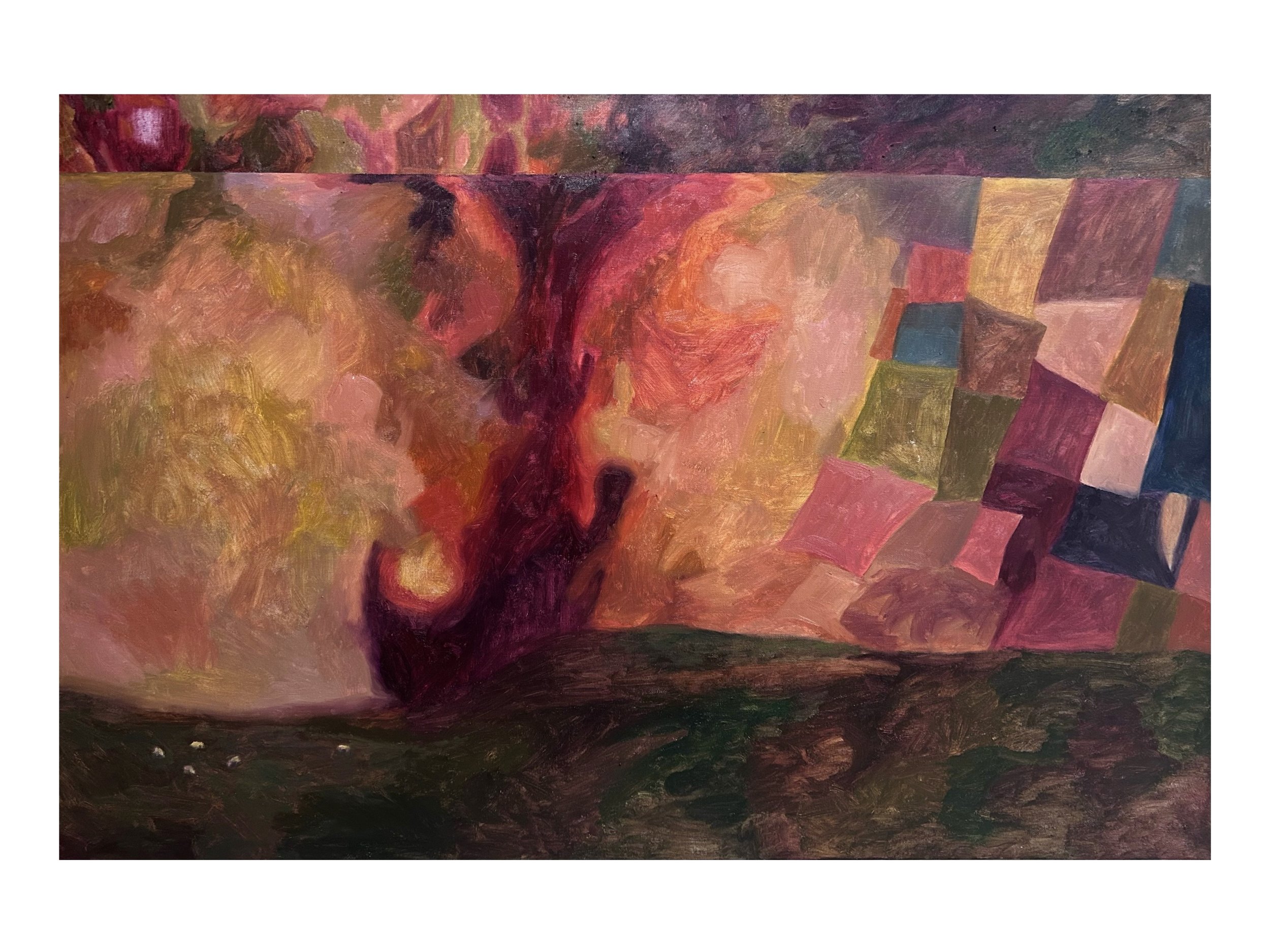
As I started painting those more, the visual approach carried over into paintings that didn’t even start with a reference, so I think any fracturing of colour, to me, is a reflection now.
Q: What about the separation from the object in a reflection interests you?
There are a lot of reasons. In a more basic sense, I enjoy that it allows me to see objects more interestingly and creatively—as a starting point for letting the painting have an element of play. For a while, I got stuck with realism, probably because I started my art practice with portrait commissions. So even though I wanted to branch out, I didn’t really know how. Starting with a reflected or warped image allowed me to paint more freely.
I still do portraits here and there. It’s still fun for me, and I think portraits can be meditative, but it gets to be limiting.
Q: Have themes of grief and mourning always been in your practice?
Yes and no. I think they’ve always been in the vicinity of my practice, but in the last couple of years it’s really amped up and become a major part in a way it wasn’t before. At the start, it was a kind of mourning that looked back at memories and perceptions of memories, both good and bad. Now I think it looks forward more, in a pre-emptive way, or as a way of grasping onto things sentimentally.
Q: What do you think your mourning in the works?
Sometimes it’s nothing specifically at all—just the feeling of wanting to hold onto things. Other times, it has been my perspective or recollection of a childhood memory. Basically, it’s about allowing both a negative and a positive version of the memory to exist at once, and being okay with the relationship between them both.
Right now, it’s mostly home [Winnipeg] and people I love who are still there. It’s a strange feeling to be so far away, and to not know where I’ll end up living in the future, or how far apart we’ll be then.
It’s a long story, but finding out about—at the time—about potentially moving to Sydney involved a lot of mourning as well, particularly around my relationship. It was a year of anticipatory grief and uncertainty, and that came up many, many times in my paintings and prints that I was working on at the time. If I’m honest, it still does in small ways, even though everything worked out perfectly. I just feel lucky.
3. How has your work evolved over the years and what has influenced those changes?
I think at first—or partially before, and maybe in art school—I felt stuck with realism, and it was really hard to get out of that. Or just thinking that I needed to have a meaning behind my art, or a concept that I’d really thought through. I think that was really difficult to move away from.
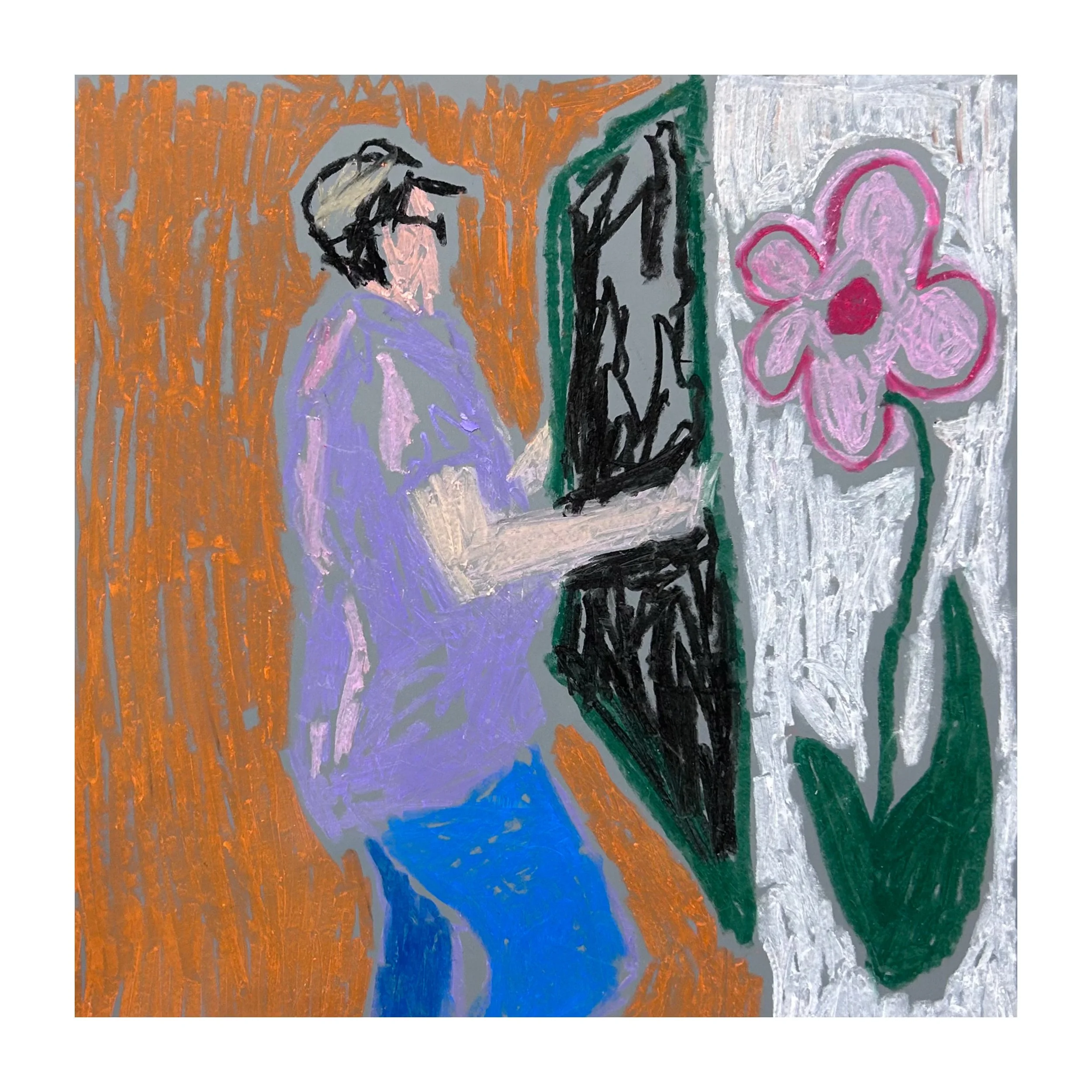
Lately, though, I've been using crayons and doodling with them, and that's been a big help—just having fun with it again and not needing to put meaning behind everything. Crayons feel like less of a ‘fancy’ art tool, and they’re super cheap, so I’ve found that the material itself frees you to be looser. I've really liked how that’s changed my approach.
More recently, since living in Australia, I feel like there's been even more of a shift, where I'm thinking about nature more and taking in all the differences in my environment.
Q: Have you always struggled with the pressure of having a meaning behind your work?
That was something that came up in art school. While it did a lot for me in other ways, and I’m happy I went, we always had to be thinking of concepts, often developing them before beginning the work. It makes sense, because those were pieces for assignment purposes, but a good portion of the work I created over those years was tied to school in some way. I felt the pressure a lot then and directly afterward.
Q: Do you find yourself discovering the meaning more often afterwards when the work is complete?
I do. In the moment, I may have a vague feeling or meaning I think about while painting, but I’m never that attached to it. Most times I feel differently once the painting is done and I look at it longer. I find it more fun to look curiously afterward.
4. What is the biggest source of inspiration for your work?
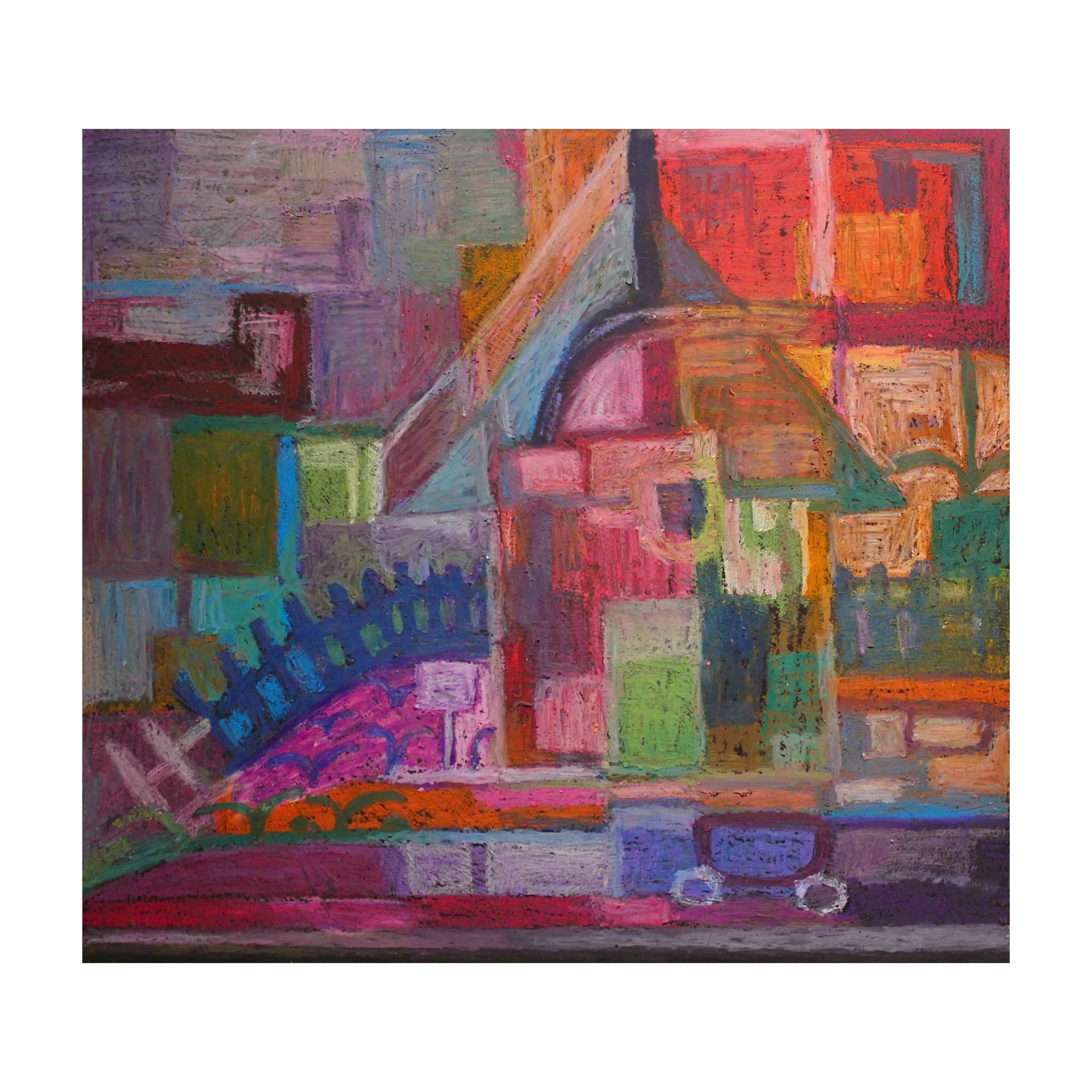
I’m not sure what the biggest source would be, but lately I’ve been really inspired by the different fence designs and patterns in Sydney. I love noticing the fancy metal gate patterns and stained glass in some of the buildings. I see so many of those on my bus ride to work. I’ve been painting those designs here and there, and I love how much character they add. I love the different plants and creatures here as well—there’s so much to take inspiration from.
Sometimes it’s things like empty chairs and beds, clothes—things that are like placeholders for people and little moments.
I also really love artists like Orla Kane, Margaret R. Thomson, and Rema Ghuloum.
5. What is the project you're most proud of to date?
I think it’s the (Portraits of) Self-Reflection series.
I really loved making them at the time, and I feel like that way of painting with reflections was something I wasn't really doing before. Now, though, I find little bits of the same—not style, but the same approach—in nearly all of my paintings. I think that has really stuck with me, and I will always be fond of them for that.
If not that project, I’m also really proud of a series I did where I projected home videos onto panels and painted the projection of the video as it moved, creating a really loose, abstract capturing of the memory. It was a fun experiment.
6. Do you see yourself returning to Winnipeg, or are there other cities that inspire you to work there?
I think the situation I'm in might not allow for me to go back to Winnipeg, because it's based on a lot of other factors—school- and job-wise for both myself and my boyfriend. I would always see myself returning to Winnipeg to visit, but I think other cities are more likely now, which feels strange.
I didn't realize how much inspiration could come from just venturing off, even though I don’t think the art is really about that. It's just that the new environment has felt really needed.
You also don't have nostalgia for Winnipeg until you're gone, and then you realize, ‘Oh wait, that was kind of good. I kind of love that city. It was beautiful.’ I never thought about it like that before.
I mean, I thought about Winnipeg in my art because I lived there, and the things I painted were things in my daily life, so it naturally came up in my work—but not intentionally.
Q: Do you find that there's more imagery of Winnipeg that's showing up in your work now?
There have been aerial views—I feel like those have been coming up a little bit lately. My dad lives kind of out of the city in Winnipeg, and when driving to his place, he didn't even have an address to type into maps—he'd just drop a pin in this field, and you’d have to try to get there.
I was staring at this aerial, Google Maps-type view of Manitoba for so long, and that approach to colour blocking worked its way into my thought process. I've been thinking about those fields on the way to my dad's, or about flying out of the city and seeing Winnipeg from above, all while at the height of a lot of different emotions. I've been thinking about that as I paint.
7. Do you think your practice would look different if you had been based in another city?
Yeah, I think so. I mean, it has been already.
I used to paint almost exclusively on board or scraps of wood because I lived at home and my dad works with wood, so I’d get a lot of his extra bits to use as a surface. My mom made a lot of crafts as well, so between the two of them and my brother, our house was full of surfaces and tools, and I had access to a lot of random materials.
Now I don’t have access to that, and I paint just on canvas. I have to paint smaller as well, due to having less space. Those are smaller things, but they still feel different. Mostly, though, it's just the difference in environment that’s making the work look a bit different. It’s more green here, and I think that has crept its way into the paintings.
Q: Do you think it’ll shift again when you leave Sydney, and that some nostalgia for it might start to appear in your work?
I think it will, because I feel like—even already—I'm preemptively mourning Sydney, and I just got here, so I don't know what's going on with that. It feels like I’m always trying to keep up with things, even though they're still here and I am caught up with them. It just feels like I’m not.
8. What would you like to accomplish in the next few years?
I think I just want to keep doing what I'm already doing. I'm trying to make a point to keep making art—or at least do something related to it—every day, because that habit is what I really want to develop and strengthen. I’d also like to do an exhibition or two out here and get more involved, rather than staying in my own bubble. I'm trying to find ways to do that at the moment.
9. If there's one thing you hope people take away from your work, what would it be?
I think I’d be happy with anything someone might take away from my work, because I don't really have a set feeling or meaning attached to each piece. Even for me, I'll look at a painting of mine one day and I'll get something from it, and then a year later find a completely different meaning in the same work. So I'm really open to whatever someone might gain from it.
I think that was my favourite part of showing work or having critiques in art school—hearing the vastly different opinions someone would have. I don't think there's a specific response I’m looking for; honestly anything is enough to make me happy.