
THE INTERVIEW
Mackenzie Anderson Linklater
1. Could you share a bit about your background and what led you to start your art practice?
I’m Asiniskaw Ithiniwak and Anishinaabe. My mom is from O-Pip-Pon-O-Piwin up in northern Manitoba, and my dad is from Pinaymootang First Nation, which is near the Interlake Region, and that's where I call home. I grew up in southern Manitoba, so I have a few different locations that I consider home.
Growing up, l was always a pretty artistic kid, and I credit a lot of that to my older brother. He's also an artist—he's a painter, and he does sewing, beading, and illustration. He kind of does it all. I always had that to look up to when I was growing up. Then I went to the School of Art at University of Manitoba. I got my Bachelor of Fine Arts there, and I did the four-year honours studio program, which I really loved and am really grateful for. I got a lot out of that program, I think, and now I'm here.
2. What themes does your work explore?
I would say it's a lot of intergenerational storytelling, which is how I describe it. Themes of family, history, language are big ones for sure, and definitely memories as well—my memories of home and my memories of family. What I started doing more of was collecting my family members' stories and memories of their homes and their childhoods, which has been my focus for the last few years.
Q: When you talk about language, are you referring to incorporating language into your practice, or to language revitalization?
It’s more in the sense of language revitalization. I don't speak fluently in either of my languages, but my mom and both of my grandmothers are fluent in Cree, and that's their first language. So when I'm looking at these generations—and now especially that I have two young nieces—I’m really thinking about revitalization and doing the work of that.
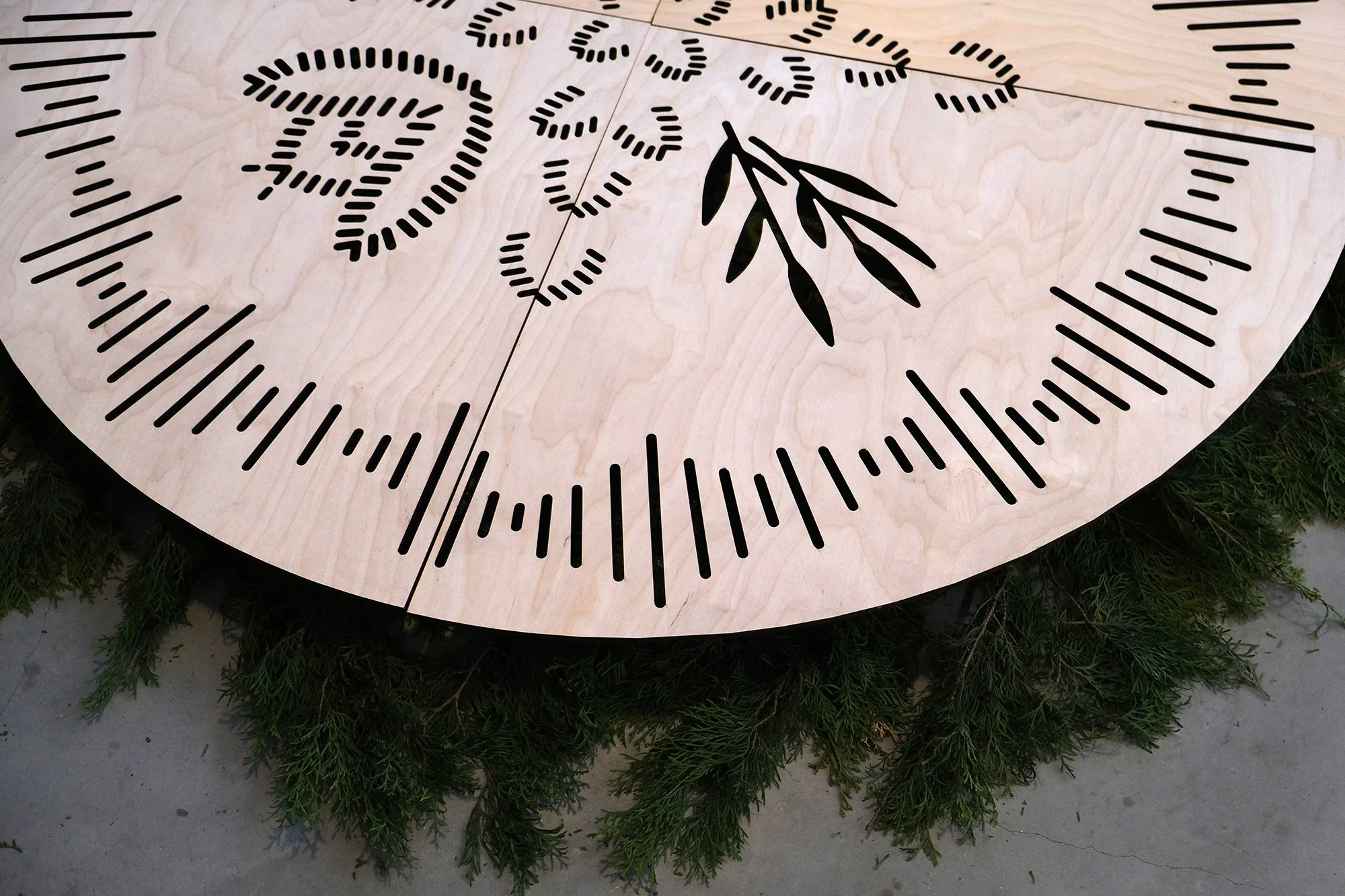
I think that's something that’s very personal to me and something I explore in my practice. The stories I collect, I’m collecting them in my grandmother's language, or in my grandfather's language, and I’m also using Cree words as my titles or within my work as the main piece. For example, I have a beaded work, Tawaw Pihtoki, which means ‘Come Home’ or ‘Welcome Home.’ I think it really changes the way the work is read when it's in the language, and it feels more true to me.
3. How has your work evolved over the years and what has influenced those changes?
I think my work has always been about identity and who I am, but I would say it's evolved into something that's less individualistic.
My family is my subject so much of the time, but they're also my teachers, and they're my editors when I'm showing them pieces. So I very much view my practice as a collaboration with my family, rather than thinking of it as, ‘Okay, this is my work, and I'm here, and that’s it.’
4. What is the biggest source of inspiration for your work?
I would say that whenever I go back home and get to visit with my family, hearing the stories—or even just seeing the objects and materials—is really important to my work. So much of my work is very material-focused, and I always love rummaging through my grandparents’ garage or being at camp and seeing all the boating supplies.
I guess just encountering those day-to-day things that aren't necessarily in my home, but that I see at camp or on trapline, or in my grandparents’ workshop. Seeing their connection to those objects, and then the stories that are connected to them is a big part of my practice.
Q: When you travel there, are you intentionally looking for inspiration, or does it happen naturally?
I think the material side of things just comes very naturally.
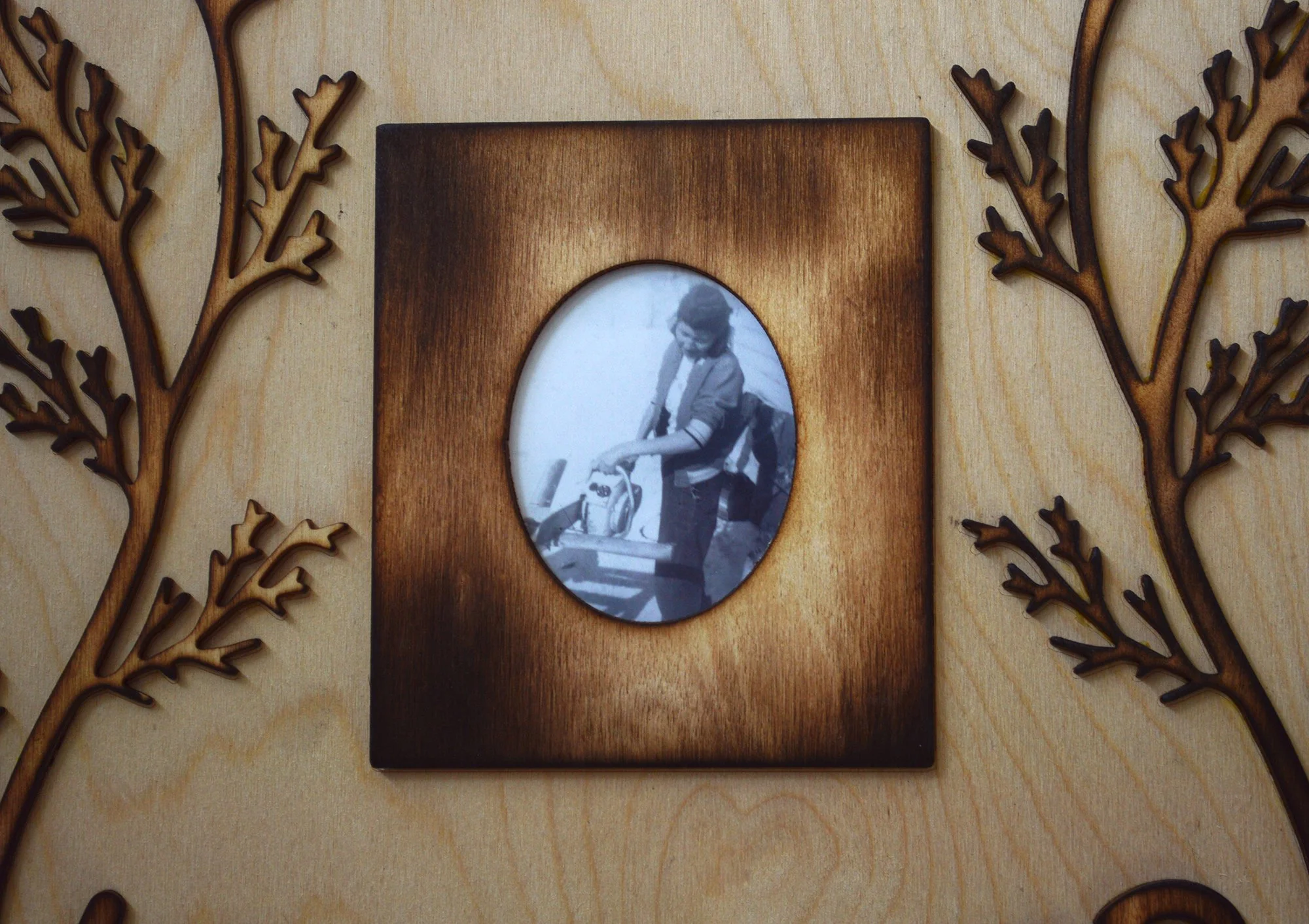
The only thing I've actively sought out is photographs, because family photographs are another big source of inspiration for me. Those I’ll have to ask for, because they’re in my granny’s basement and she has to dig them all out. So when I'm specifically looking for photographs, or references like that, I’ll have a bit of a plan. Otherwise, I like to let the material elements just pop up on their own and see what catches me.
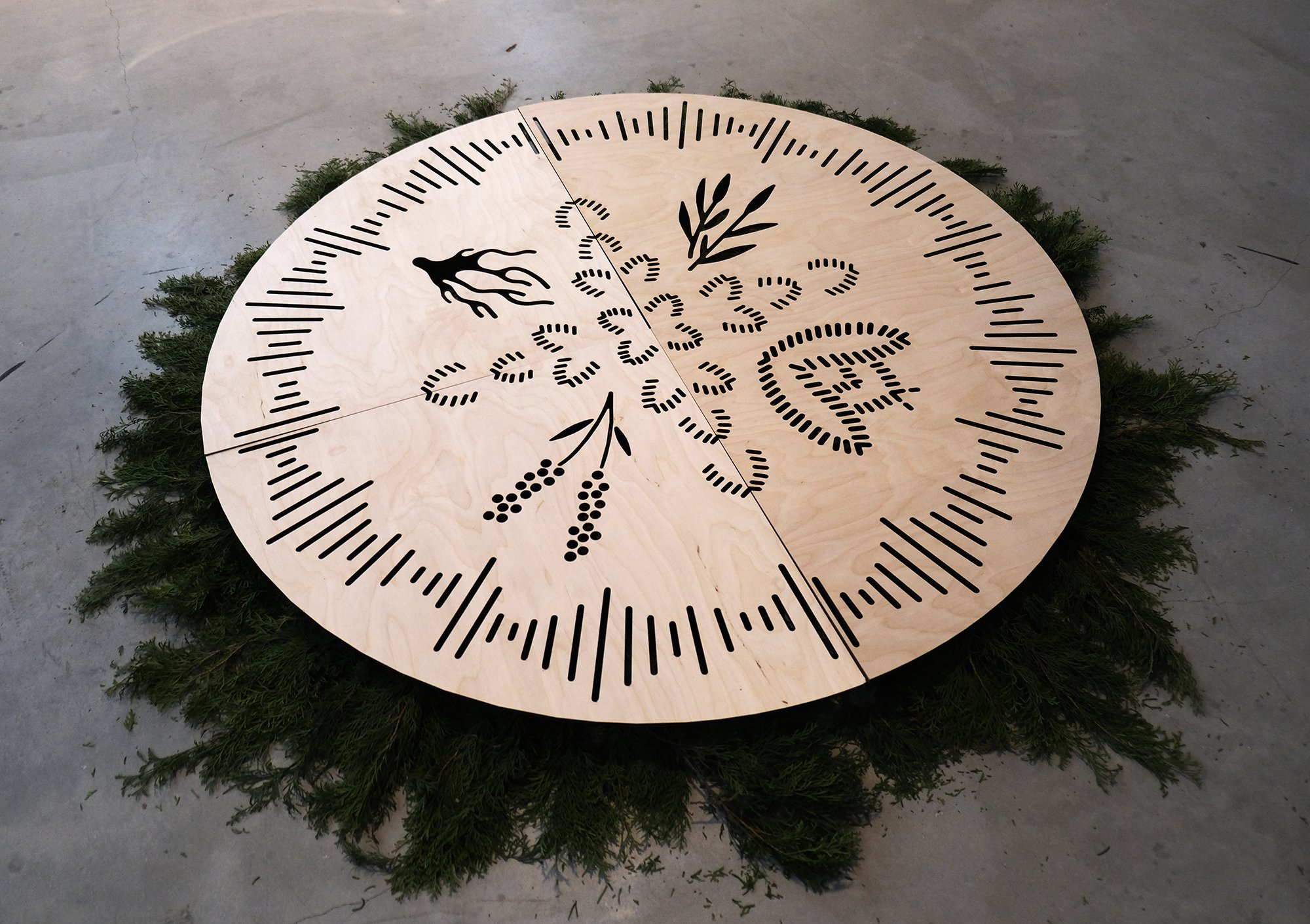
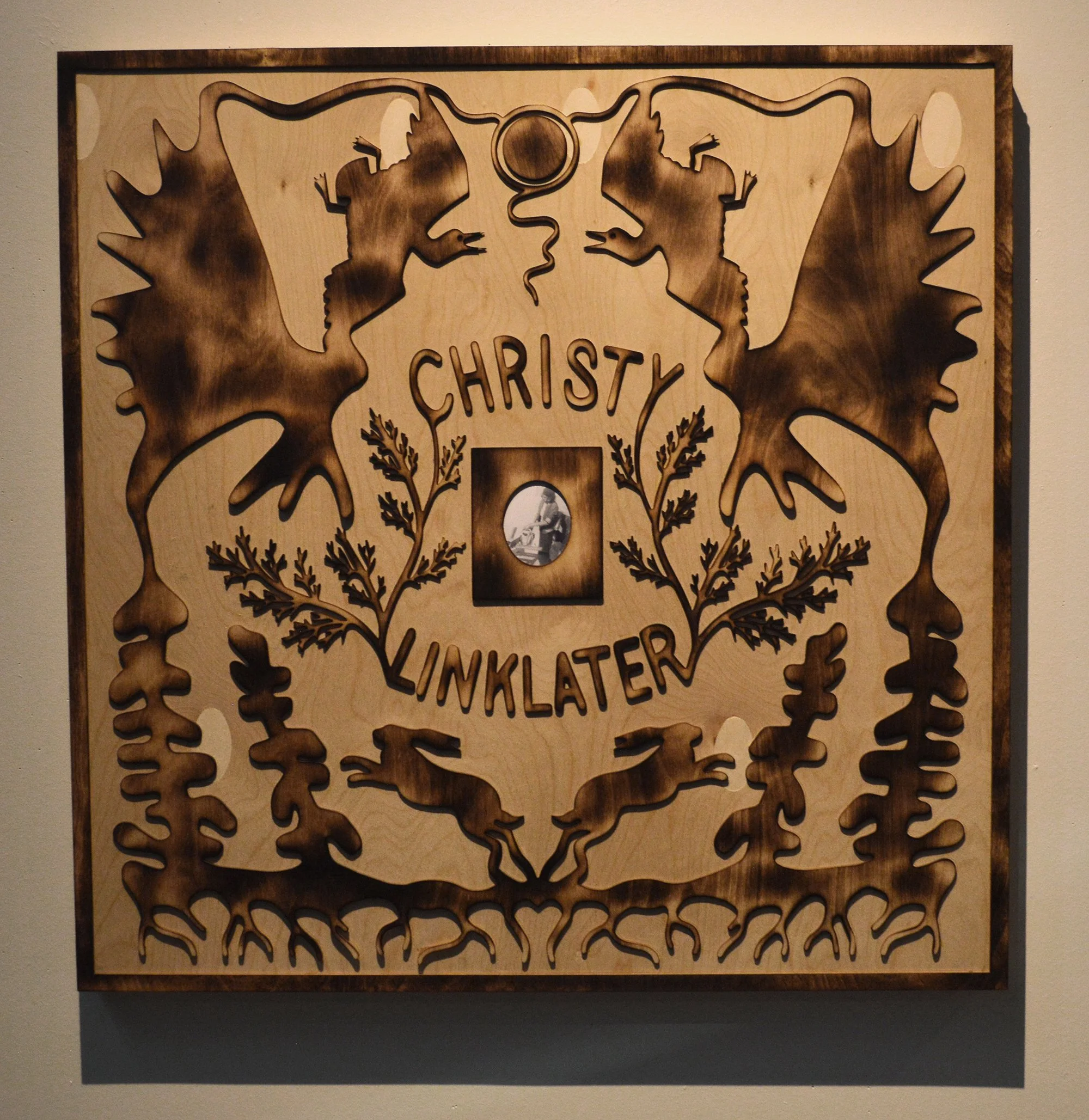
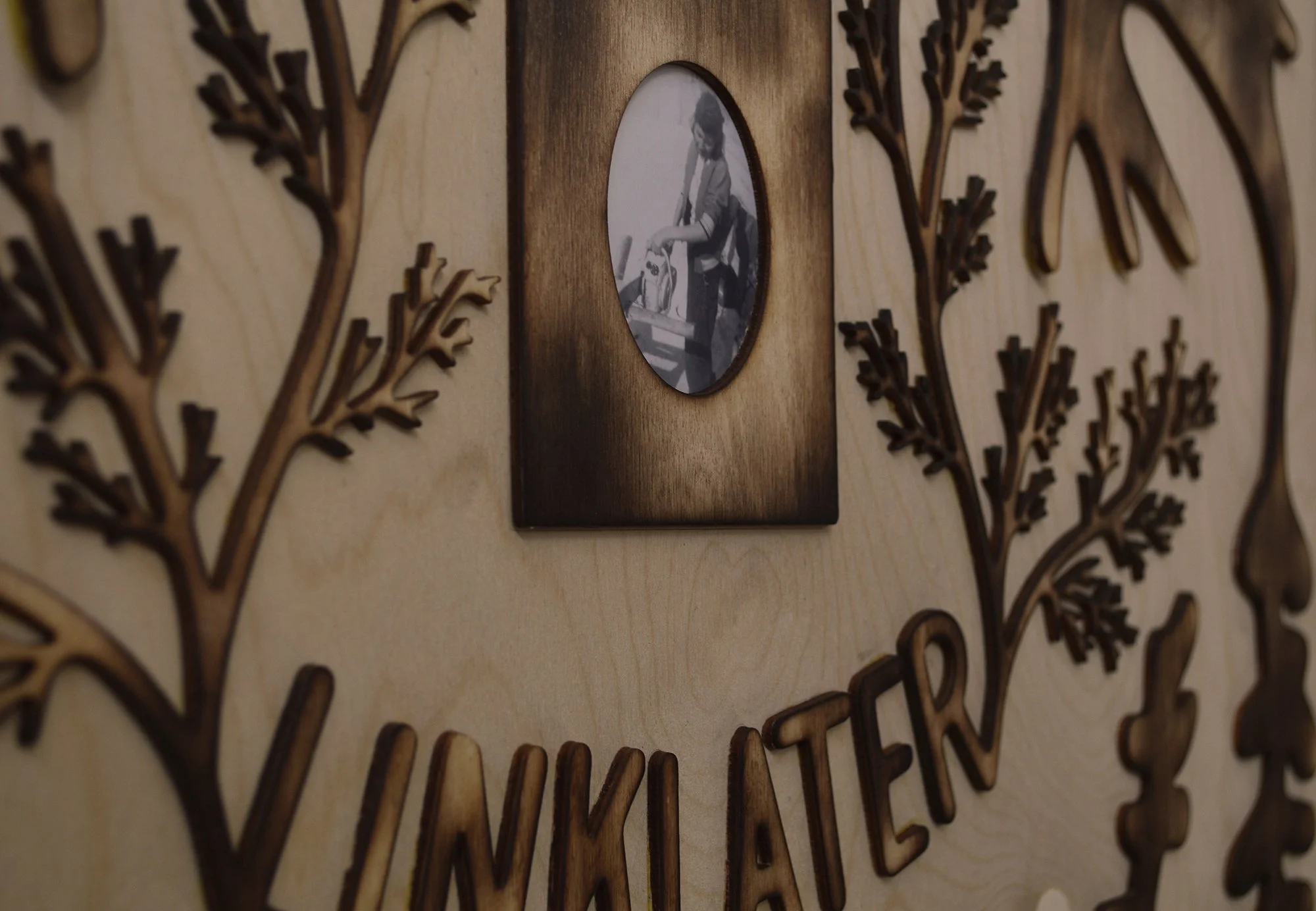
It's different every time. Sometimes it might be wood carving. At my great-grandpa's cabin, for example, he had this huge wooden—almost like a plaque, I wouldn't even know what to call it—that was beautifully carved with our family’s last name, ‘Linklater,’ and attached to the side of the house. And I remember being really struck by it, having this signifier of the family right there. It’s not something I even realized was there, but that time it stood out to me.
So I made my own based on that. I have a piece that’s woodburned and laser-cut that says ‘Christie Linklater,’ and it's the mirrored image. That piece was inspired by the original plaque that was on the house. I love that idea of just having this handcrafted object that identifies the family. So I really wanted to play with that sense of pride in identity, and in family identity.
5. What is the most challenging stage of the creative process for you and why?
I would say when I'm picking materials because I have to be really conscious of the material’s limit, and not push that limit too far to the point where it's not allowing the material to shine in its best way. So I'm not a maximalist when it comes to anything, really.
I think just trying to do what's best for the piece and let the piece and the material speak for themselves as much as possible. It’s also about distancing my ego from ideas of how far can I push them or how big can I make this, and really just letting the material do the work. I very much believe that the materials I use have spirit and they have a history and it's not for me to manipulate them to a point where it just becomes about me. I want to have a relationship with the materials and not be fighting them to the point where I’m imposing my will on the materials.
6. What is the project you're most proud of to date?
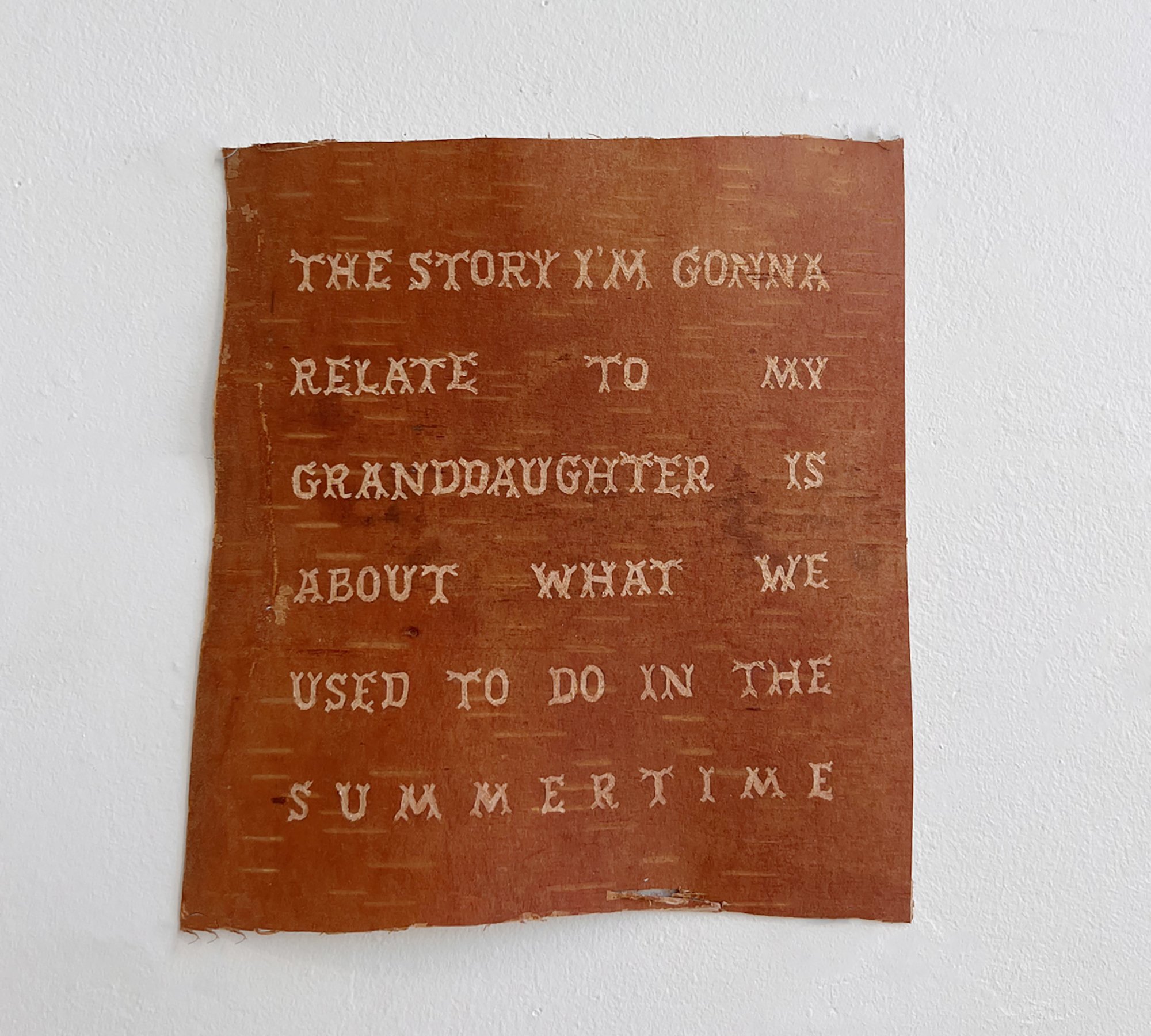
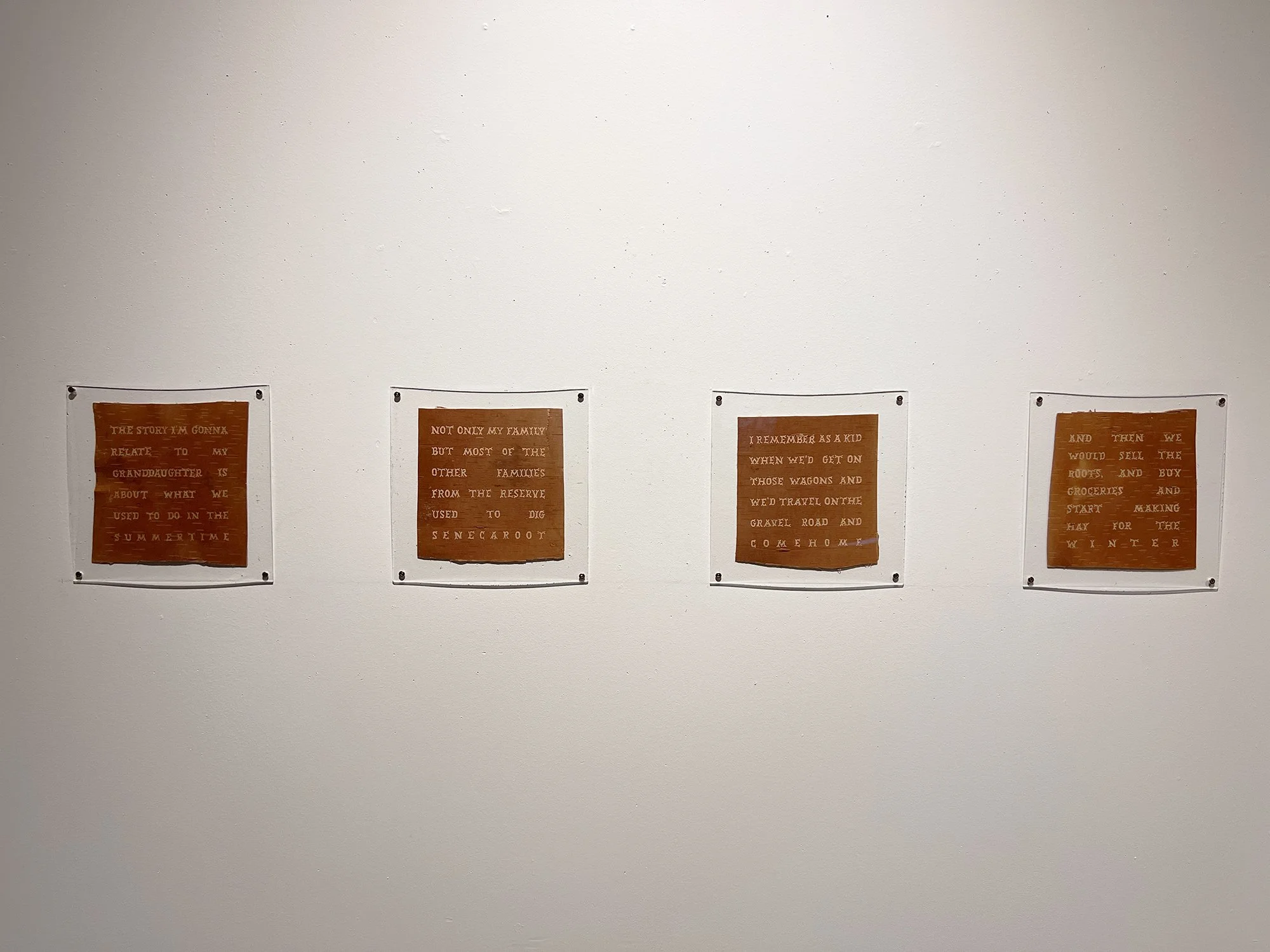
Probably the birchbark etchings. They're titled To My Granddaughter, and those were part of my honours year.
When I made that work, I started with a story that I asked my grandfather to tell to me. I recorded him as he told the story in English and then I recorded him again in Anishinaabemowin. I’ve been very interested in birch bark biting and birch etchings as this way of documenting stories and teachings and ceremony, so I wanted to etch this story into the birch.
The fall after graduation, my grandpa passed away so I took a step away from everything and stopped talking about that work. When I started that project, I could go to him for his stories, or to ask about the history, or even words in Saulteaux. It's been hard without him in so many ways. Although he’s gone, I’ll always have his stories to carry with me. I’m very grateful that I have these recordings, and I have this piece that I made to honour him and his story, and I was really grateful he got to see the work as well.
I'll have that forever. I'll never get rid of the etchings, and I'm just grateful to have had that opportunity to collaborate with him in that way.
7. Do you see yourself staying in Winnipeg long term or are there other cities that inspire you to work there?
I do see myself staying here. So much of my work, and who I am, is so connected to my family. I'm a very family-oriented person, and I love being so close to them. Even the land—I’m in the same area my family and my ancestors are from. I'm really lucky to have that connection, and to be in a place where I know this is where I'm from, and having that special connection to it. When I do go home, you know, we call it blood memory, and it’s something you really know in your heart, you really feel it. So for me, when I go home, I feel it, I know, and it's kind of like that truly cellular level of knowing, which is so interesting.
So I think I will be staying here. I don't really have a huge desire to go somewhere else and settle there.
I’d love to travel, but this is very much home.
8. Do you think your practice would look different if you're based in another city?
Yes, totally. I'm really lucky to be so close to my family that I can take a two-hour drive and be there, hear those stories, and hear that language firsthand. I think I would feel homesick if I wasn't in Winnipeg, and I think my work would reflect that distance—from my family and from this land. My work would probably be very mournful, carrying a sense of sorrow and yearning.
I truly feel like it's right here and I feel like my work is grounded here. I feel very plentiful here—there's so much here for me and I think somewhere else I would feel a bit lost and far from that connection, almost like a diaspora.
9. What would you like to accomplish in the next few years?
I want to just get back into it. As I mentioned before, my grandpa passed away, and one of the things that we practice in grieving is that you step away from something for a year. For some people, when someone passes, they'll step away from powwow—something they love—for a year. It’s about the practice of taking time to really grieve, and I stepped away from creating art.
It wasn't something I'd planned or even consciously decided. It just happened so naturally, especially with my last work being so centered on my grandfather. And now my year’s up, and then some—it was September—so I've definitely been thinking about how I’m going to get back into this. What is that going to look like now that he's gone and I'm kind of taking that time? I'm so grateful for the space I’ve had, because this is truly the first art-related conversation that I've done since, and it feels like it’s a good first step and a very safe space to do it, which feels great.
The last year as well—well year and some—I've been working in graphic design and illustration, which is very different from what I was doing before with my studio work. I've been doing more crafting and beading too, but not so much in the way that I was for art school. It's more like gifts for family and gifts for ceremonies, so it has a different intention to it.
I'm interested to see how the last year of graphic design and crafting will influence this next step, so I'm excited for that.
But yeah, I’m ready to get back into it.
10. If there's one thing you hope people take away from your work, what would it be?
I'd say the importance of the work of language revitalization—of passing on the language and passing on the stories, but also taking on the work of doing that.
It isn’t easy to relearn your language or to relearn those stories. Even going home, visiting, and asking for those stories and teachings isn’t always easy. There is so much pain in our communities, and it can be tough to ask that sometimes. But at the same time, there’s so many stories full of love and resilience, and most of all humour!
It is so important. Hearing stories from my grandpa's childhood is something I'll always carry with me, and something I'll be able to pass on to my younger siblings and to my nieces and one day my own children. They’ve really motivated me so much to think about the next generation, and how I now have to start thinking about it in the same way that my aunties took care of me. That definitely lights a fire under you to get going.
I think that’s how we truly keep our history, our culture, and our language alive—and that feels really important to me.