
THE INTERVIEW
Gabby Gatbonton
1. Could you share a bit about your background and what led you to start your art practice?
My family are all creatives, but I was the only one to pursue an art degree. I’ve always drawn ever since I was young, but I think my moment of clarity happened when I was in eighth grade. My teacher at the time told everyone we’d be drawing portraits during our free period. At that point, I had never drawn anything in realism, but I think he saw potential in me as an artist. After school, he gave me an entire drawing set—sketchbook, blending stumps, pencils, the works. I think at that point it clicked for me, and I continued to draw.
Further into high school, I had an art teacher who encouraged me to go to art school. I knew I wanted to go into the arts, but I didn’t know it was an option I had, considering the long line of nurses in my family. In 2015, she took us to see the art show at the School of Art for that year’s graduating class, and once I set foot in the ArtLab building I knew I wanted to continue with the creative path. And it’s only been up from there!
2. What themes does your work explore?
My practice delves into identity and body politics as a whole. With the broadness of identity, it opened up a conversation about the nature of existence as a queer person. I think of identity’s ever-changing character as a process of transformation—to understand it as indefinite and inconsistent, constantly reshaped by social norms and the political control of bodies. My practice expands on the becoming aspect and ambiguity of identity itself.
I’m intrigued by this aspect of identity and how different that looks for everybody. The core of someone’s identity is shaped by their lived experiences and environment; it wouldn’t be the same for any two people. I love the idea that there is always room for growth and change, and my work serves as a reminder that the essence of our being is constantly in the process of evolving—a person will not be the same as they were a year ago. I like to think that this process of change occurs within us daily, with influences from our surroundings. It could be as small as being influenced by an ad seen—something as simple as finding interest in a new purse. The interest wasn’t there previously, but now it is. The opposite could happen as well; having a different taste in shoes than the previous year would still render you a different person. In some way, our core identity remains similar, but we always incorporate this newfound change into our daily lives.
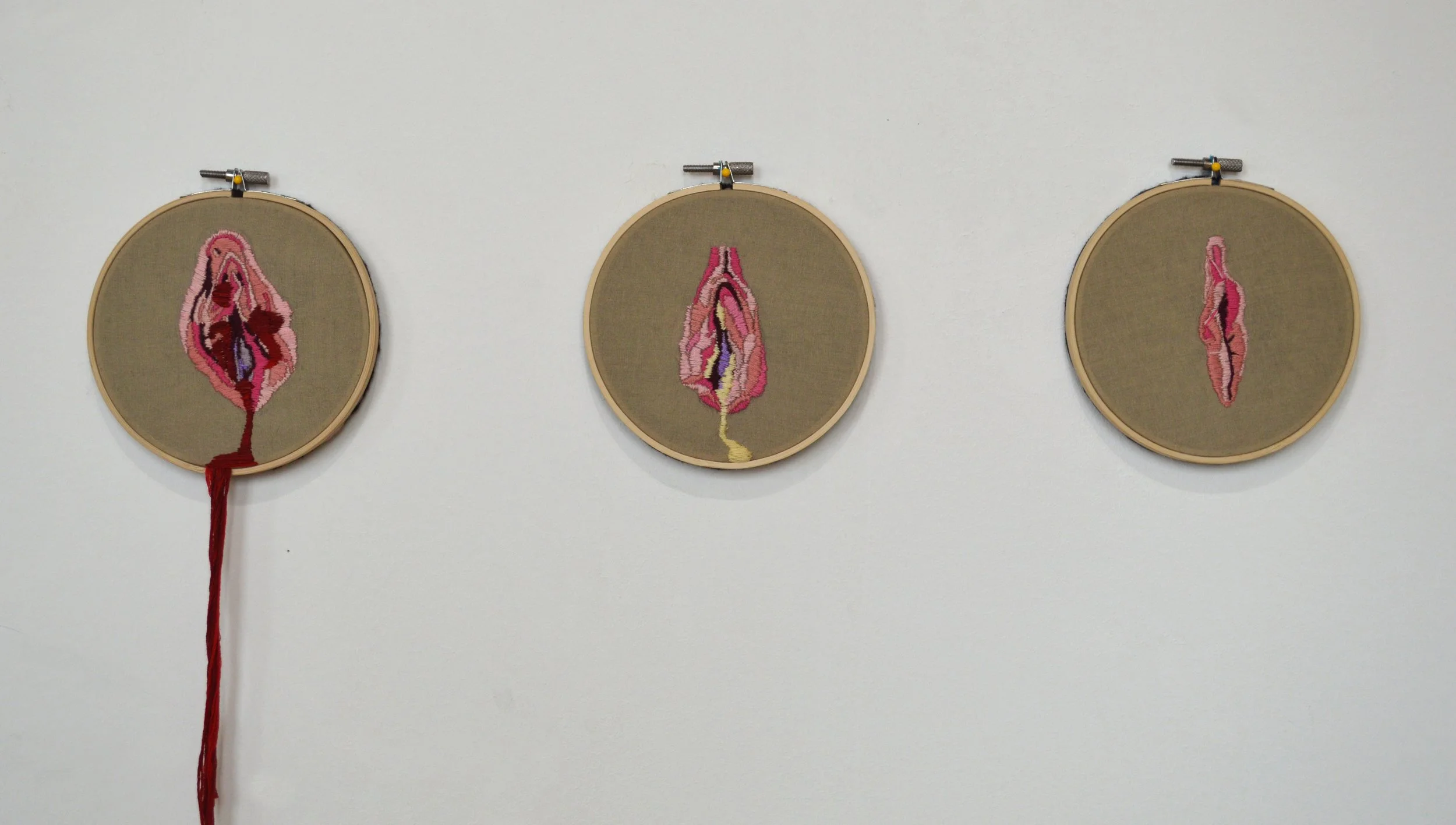
My work also explores the complexity of intimacy, vulnerability, and sexualization, while contributing perspectives on queer desires and reclamation. My imagery is often explicit; eroticism, beyond being purely sexual, exists to cross boundaries: self and other, control and surrender, etc. The erotic nature of my work serves to deconstruct the idea of the body and queerness as taboo, reclaiming this through a reversal of power dynamics: the figure is in control of who is viewing them.
3. How has your work evolved over the years, and what has influenced those changes?
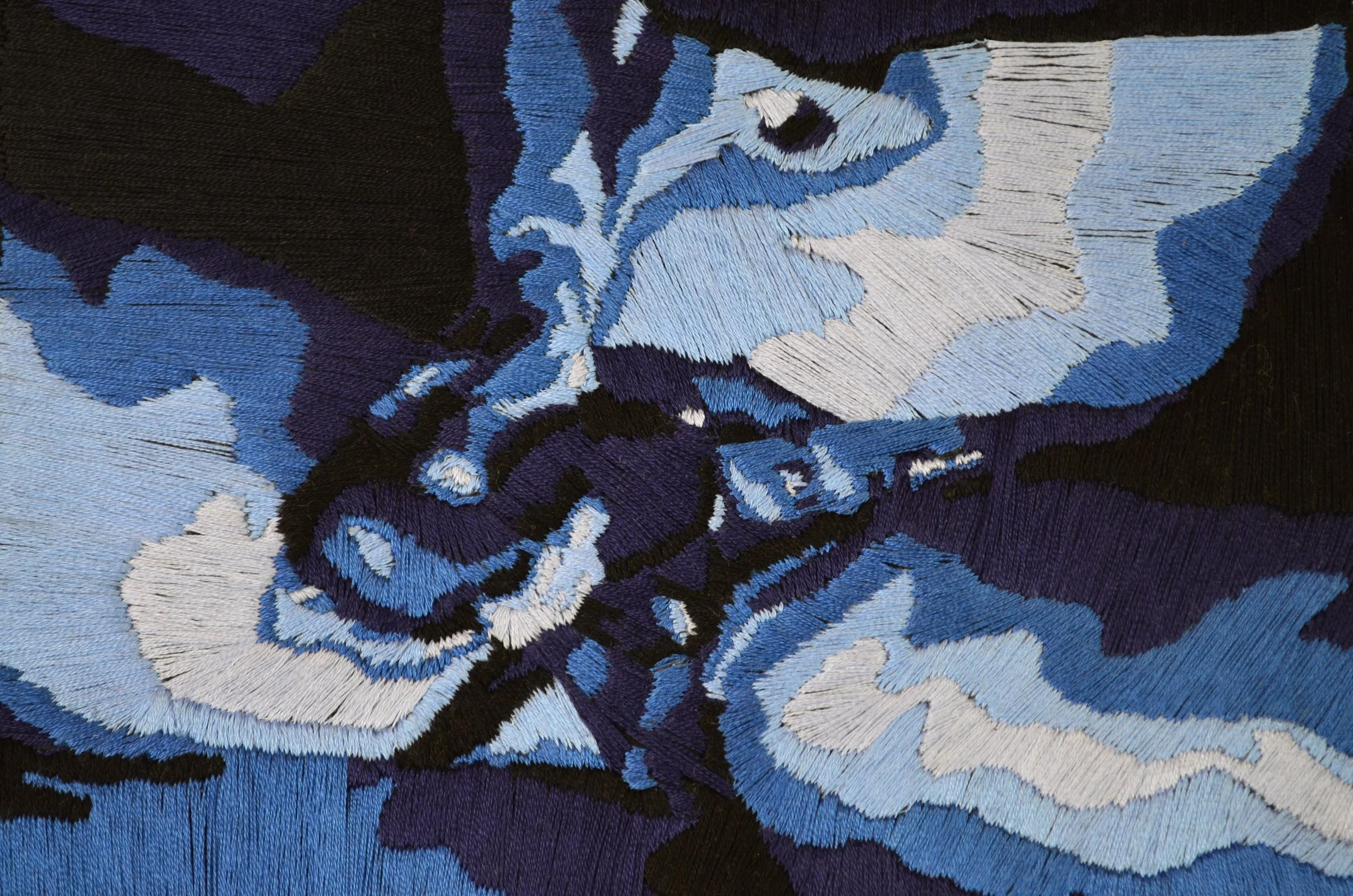
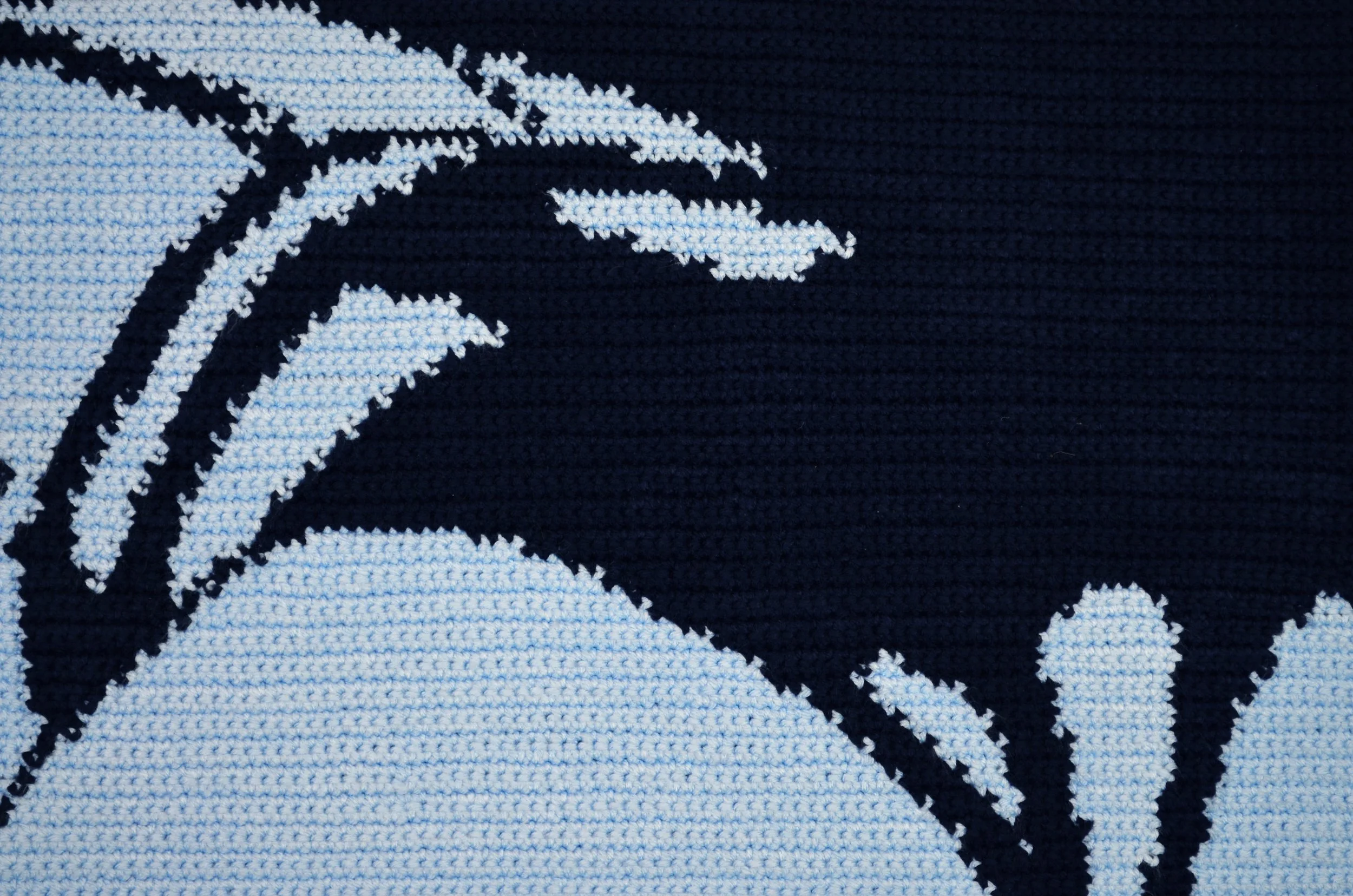
I feel like over the years, my work’s subject matter hasn’t changed drastically—more so my choices of medium. I started painting in 2018 when I was studying at university and have been producing large-scale works since. Lately, I’ve been heavily leaning into textile work. I’ve been interested in the idea of craft, which historically has just been ‘pretty and decorative,’ and contrasting that with erotic imagery. I love how the intimate body highlights the contradiction between the softness of the material and the tension of the imagery.
This change happened in a spur-of the-moment way. I was on hiatus for several years and lost passion for painting and art in general. Paired with working multiple jobs, I felt like I was stuck doing the same thing over and over again, so I wanted to try something new. I was recently at a residency in Iceland, and it kind of opened my eyes. Without the social pressures and work, I was able to focus solely on artmaking, and it helped me find the desire to continue.
Social media also definitely influenced this change; there’s a textile artist that I follow who crochets, Alexandria Masse, and in an interview she says, ‘The rule of crochet is that there are no rules.’ Something about that clicked for me. I really like the way she phrased it, and it’s taking me on this experimental run where I'm just trying out a bunch of different textile things.
Unlike my main painting practice, which is controlled and calculated, fibre arts introduces a sense of unpredictability, requiring me to rethink techniques and trust my own instincts as an artist. Developing my own process for soft sculpture has been so enjoyable; this unknown stage is allowing me to push past the comfort of familiar boundaries and embrace uncertainty as a tool for creativity.
Q: Why do you think you lost a passion for painting?
During this time, I hit a plateau with my art career. After finding success with the painting series, I think I wanted to keep repeating similar works to find similar success—to the point that I overdid it. The process for everything I made became monotonous, and I stopped looking forward to finishing pieces. My process became easy to me, and I felt like I wasn’t challenging myself enough with what I was rendering, but I wasn’t sure how to progress further.
In hindsight, I could have easily changed my subject matter or painting style for a change of pace, but I was still really interested in the imagery I was painting. It was just my method that became too familiar and repetitive, and I wasn’t sure how to keep myself engaged long enough to finish—hence the long hiatus. Ultimately, I think I just needed a bit of a breather from painting.
Q: Have you returned to your painting practice at all since then?
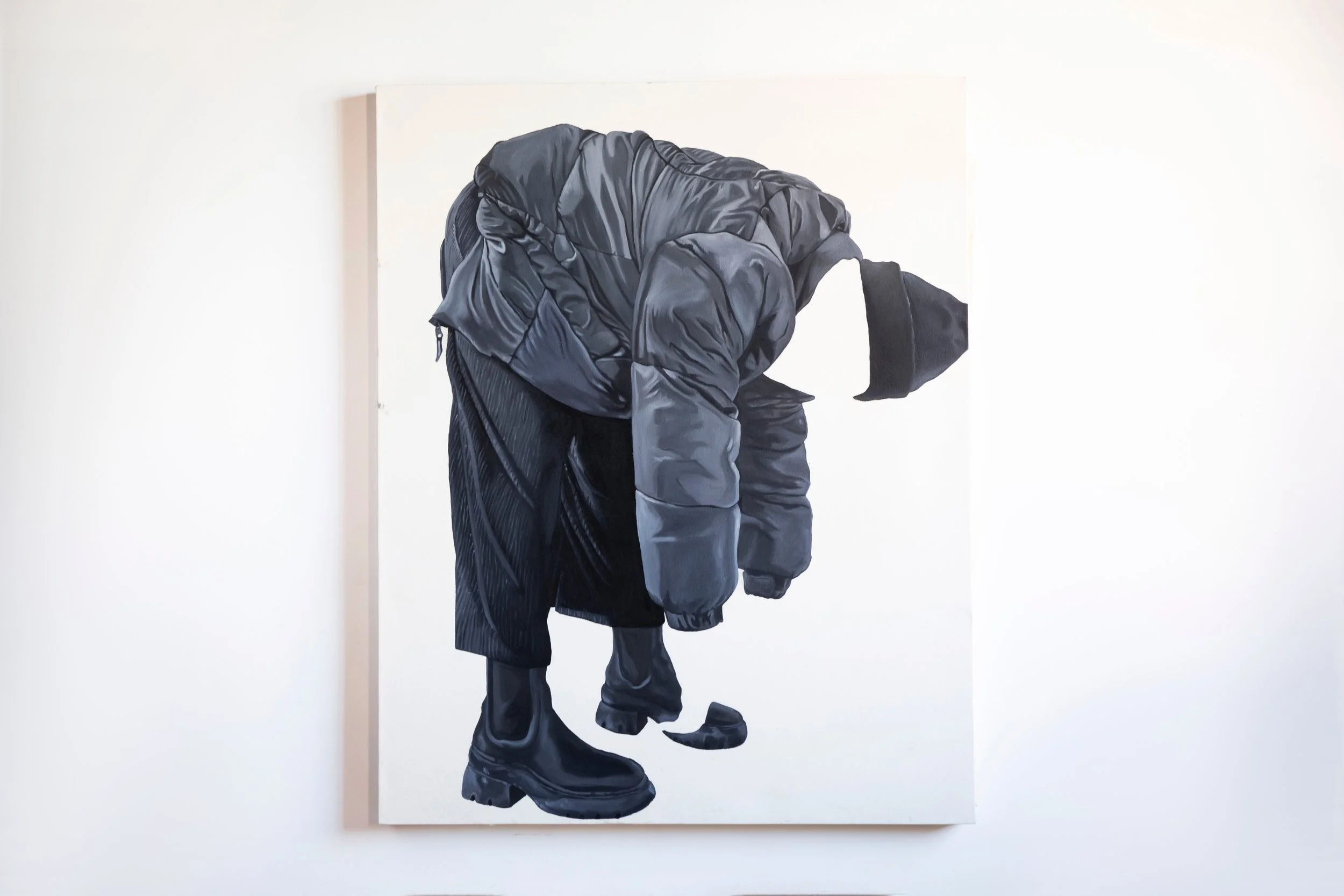
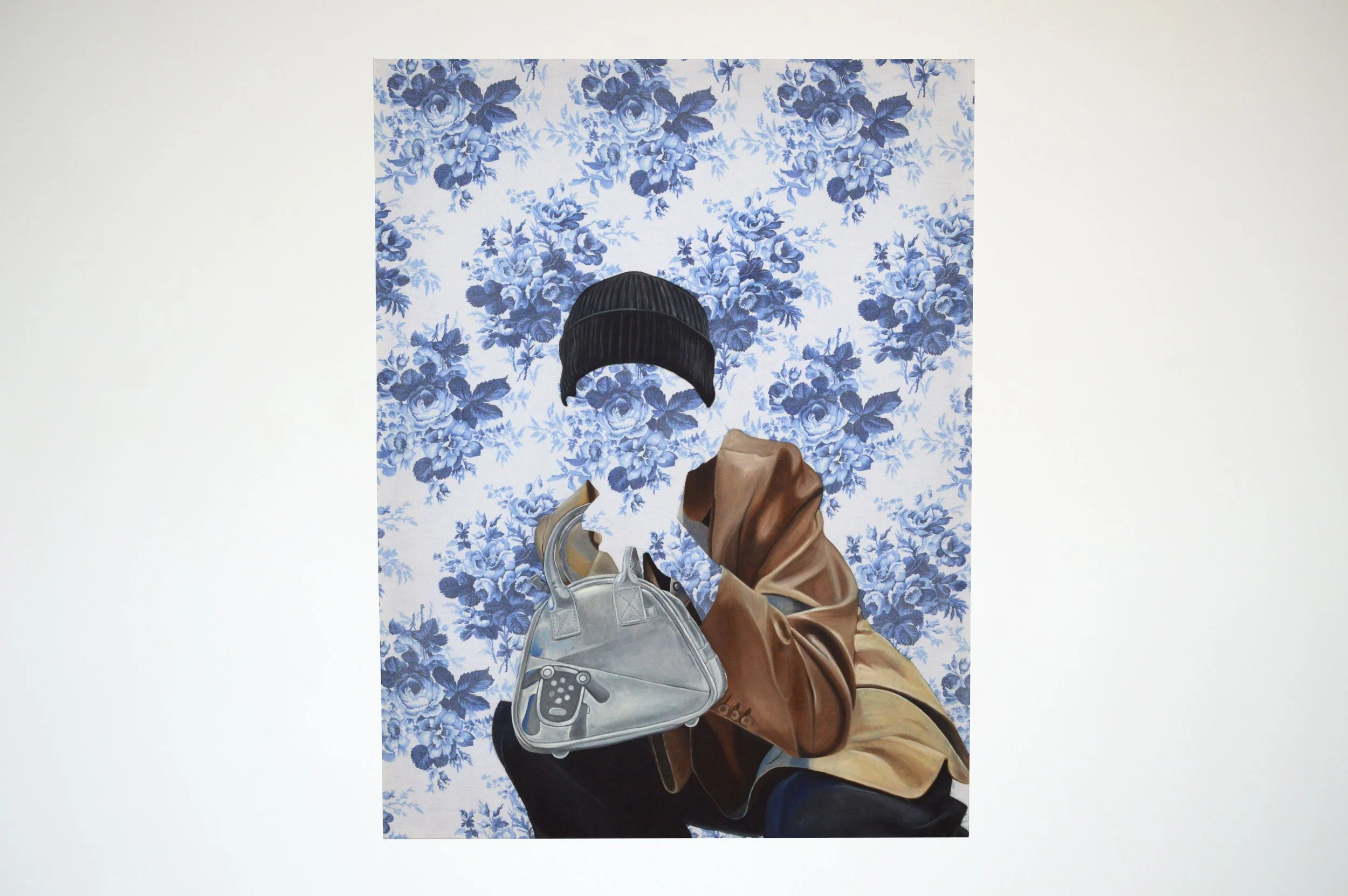
I just recently returned to painting! Pigeonhole was actually a project I’d started in 2022, and just finished this December. A lot of time has passed, and I feel lighter having finished this piece. It was something that always stared at me while I was in my studio, but I couldn’t bring myself to continue. I made it my goal to finish before the new year and really committed to doing that. Honestly, it did reignite a little bit of my passion for painting again. I have several paintings in progress from previous years, so hopefully those are projects I’ll revisit again as well.
4. What is the biggest source of inspiration for your work?
I think my work is me trying to develop my own understanding of intimacy and maybe eroticism. I was raised Roman Catholic, so anything in that caliber was definitely off-limits. I remember that even with something as small as kissing scenes in movies, my mom would tell us to look away. Funnily enough, to this day, I still find myself doing little things like that.
I think little things like that have shaped this weird perception I have of intimacy. It’s almost like an overconsumption or overdoing for me. It was ‘forbidden,’ but now it’s all I want to depict in some act of rebellion. Part of me just wants to change the stigma surrounding queer bodies, considering what I was told growing up.
That being said, I also have a background in Women’s & Gender studies. My personal beliefs, partnered with that knowledge, really fueled my desire to create work that challenges body politics discourse.
5. What is the most challenging stage in the creative process for you and why?
For me, the most difficult part is putting context and concept into work. I find that I like to make work for the sake of making work, if that makes sense. I love using my hands and just creating something I like for the fun of it. I want to crochet just to crochet; I want to embroider just to embroider. Sometimes the concept doesn’t show up until someone mentions something they notice, and I lean into it partly. Obviously, I have a vague idea of what I want to do, but the concept is never fleshed out. It’s usually when people tell me what they notice that I kind of start piecing things together and creating my narrative that way.
Q: Why do you think you prefer the tactile nature of crochet over painting? Don’t both involve working with your hands?
I’ve always been a big fan of texture. I actually started as a self-proclaimed sculpture artist, so a lot of the work I made before committing to painting was mostly tactile. I love the idea of being able to feel and interact with work—it’s just something that you don’t get with painting, or my paintings, personally. Although both do use your hands, with painting it’s your eyes that get a sense of the texture you paint. I love rendering fabric because you see all the wrinkles and textures; you know what it would feel like… but you can’t actually touch it.
With crochet, it’s so interactive. Whether I make a mistake or not—missing a stitch, adding an extra stitch—every tactile aspect in the project is a product of me putting it there. There’s also this interesting aspect with the action of undoing. In painting, you just paint over it or add into it. With crochet, it’s almost like you have to undo half your project if you realize you made a mistake many layers in… It’s a labour of love with the effort it takes to correct textile art, and I’m intrigued by how the smallest mistake could alter the way your final piece looks.
It’s almost unpredictable, and I like to be kept on my toes a bit.
6. What is the project you’re most proud of to date?
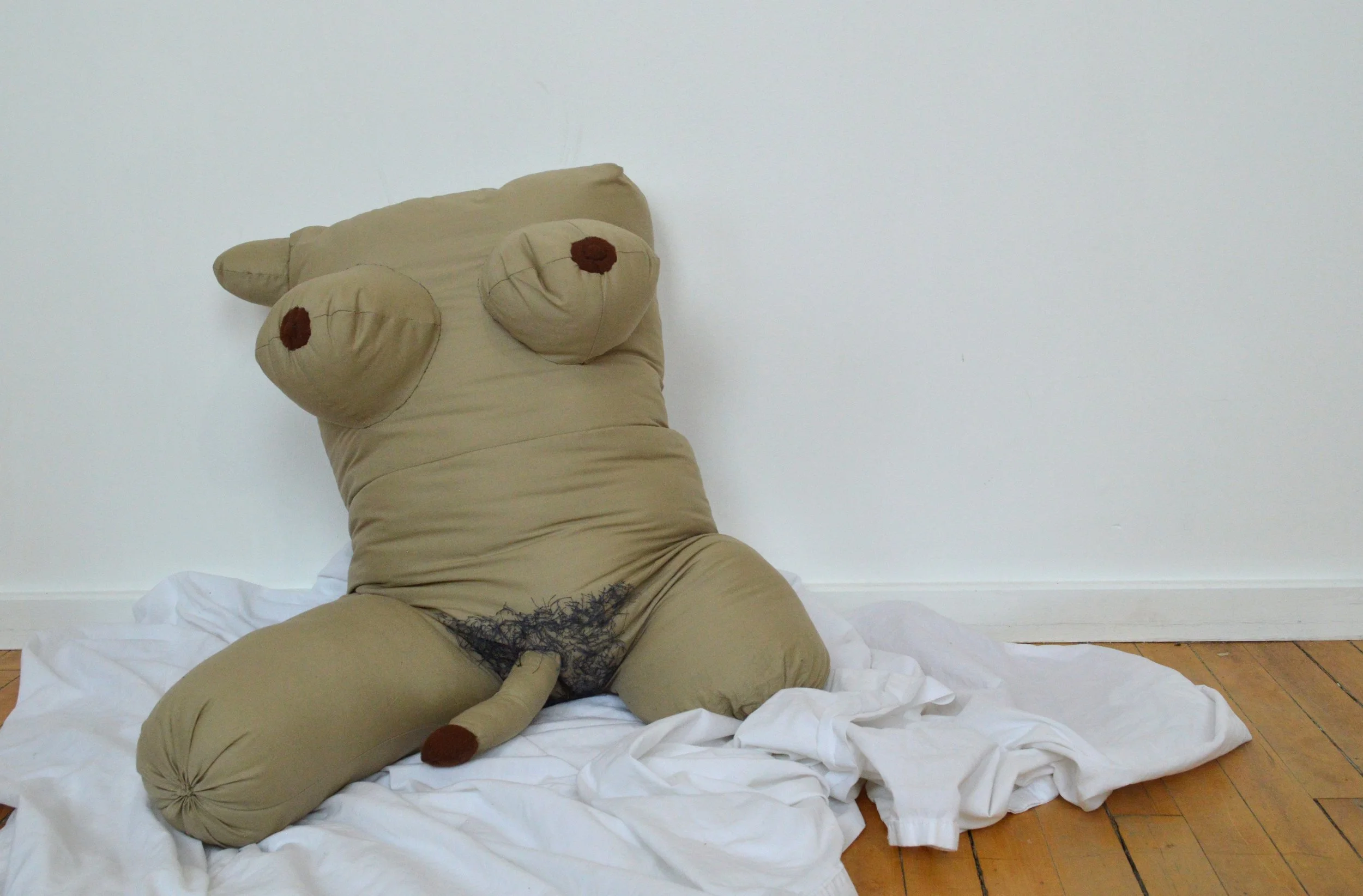
I’d say I’m most proud of my soft torso sculpture... The title changes every few years, but at this point everybody just knows it as the boob doll. I made it in part for my Women’s & Gender studies course where I read an article about ‘monstrous bodies.’ It talked about bodies outside of the ‘norm,’ meaning anything that had to do with deformities, disabilities, etc. It also discussedintersex bodies, and I was so intrigued that I decided to make work referencing all of it.
It was the first work where I was personally asked to be part of an exhibition, and honestly, it was kind of my gateway to soft sculpture. It was also my first time experimenting with developing my own patterns. It’s one of those works that’s made me feel like an actual artist, and now it permanently lives at a gallery in the city, aceartinc, which is pretty cool.
7. Do you see yourself staying in Winnipeg long-term or are there other cities that inspire you to work there?
Personally, yeah—I think people don’t give Winnipeg enough credit. The art scene is very tight-knit and so welcoming and encouraging. I’m grateful for all the artists that I’ve met and have given me different perspectives on my work. Obviously, there are always different cities to visit and check out their art scenes, but I feel like some of them are too competitive for my liking... maybe a little too busy.
I think Winnipeg is a good place for someone still emerging or mid-career, but who knows—maybe that will change for me. I’m still looking into grad school options as well, so living somewhere else short-term could also open my eyes a bit.
8. Do you think your practice would look different if you were based in another City?
I think so! Sometimes I wonder what my practice would look like if my family hadn’t moved to Winnipeg. I grew up in Singapore, which is a relatively conservative country, and to think about exhibiting queer erotic work—or even having an outlet to do that—almost seems unreal. That isn’t to say that type of media doesn’t exist there... but for me personally, to produce work like I do now, I’m not sure how it would be received.
I think in some way I’d find my way to the practice that I currently have, but it would, of course, be slightly different. Everything that I’ve made is from lived experience, and my knowledge comes from the community around me that has shaped my understanding of identity and body politics. If I had lived elsewhere, I’m sure my thinking would be similar, but I would have completely different influences.
Q: Your paintings seem notably less erotic than your weaving, would you like to move in that direction with your paintings as well?
Hmm, I’m not too sure. My textile work is erotic because I like the juxtaposition between the subject matter and the medium. With a medium that’s considered to be ‘pretty and decorative’ contrasted with lewd imagery—a subject that’s meant to be hidden and unseen—something about the irony between them is intriguing to me. That just so happens to be the case with textile work because of its historical significance.
In terms of my paintings, I’m not really sure how I would make that kind of connection between imagery and medium.
9. What would you like to accomplish in the next few years?
In the next few years, I’d like to be braver and start applying to more things. It sounds small, but I think I just need to start putting myself out there, even just exhibiting work outside of Winnipeg. I feel like, as an artist, I keep feeling the need to box myself in. It’s either I’m a painter or I’m a sculptor... I have to remind myself that I can be both, and many more.
That being said, I have ideas for more pieces, but it’s always a matter of hoping to receive funding to make them. I want to continue building and developing a proper portfolio to show. Right now, my selection is so limited I’m almost embarrassed anytime someone asks about my practice, to be honest. That, and maybe getting myself started on a website. I guess that’s a little bit inconclusive, but they’re small things for me to continue working towards.
10. If there’s one thing you hope people take away from your work, what would it be?
I think I want people to look deeper into my work. Sometimes I feel like when people see it, they go ‘Oh, great—another naked woman,’ and move on. I want them to feel drawn in and invited to do a deeper investigation of what it actually is. I want viewers to reject the notion of passive consumption and to question their assumptions about the pieces.
But I also want people to know that my work is always open to interpretation, and I love hearing the many ideologies that people attach to it. That might sound a bit like a cop-out answer, but it really gives me insight on my own work as well.