
THE INTERVIEW
Bronwyn Lutz-Greenhow
1. Could you share a bit about your background and what led you to start your art practice?
I come from a family of artists—my grandparents on my maternal side went to art school; my mom went to art school, my dad's a chocolatier, they are all very creative—so I feel like the desire to create is something I've just seen expressed and felt my entire life. Being in that kind of environment, I felt supported to go to art school; it was less of a black sheep thing and more just like, ‘Well, yes—go to art school. What else?’
I remember I got my first little point and shoot camera when I was eight, and I was just taking photos of anything and everything, forcing my friends to stage these little scenarios and stuff like that. But I remember, in particular, we went on this one family vacation to Tofino, and I had taken a picture of this large piece of driftwood on the beach at golden hour.
I just remember showing that photo to the adults that were on that trip and getting a really positive reaction. I guess seeing that reaction sort of triggered the idea that you know, images have the power to evoke a visceral response from people.
And I’d say my family's very harsh or straight up. So if it looked bad, they would have told little eight year old me it looks bad—they would have been like, ‘Why are you showing us this?’ You know what I mean? They're very—I wouldn't say critical—but honest.
Then, as a teenager, I got my grandfather's film camera, and I started shooting film when I was in high school; I just really fell in love with the tactility of film. When I got to university, I got to learn how to develop and print black-and-white and colour film. Black-and-white film is what I really first fell in love with. Getting to learn the full 360 process when I was in university just made me feel very fulfilled, and I thought, ‘Okay, this feels right. I'm supposed to be doing this. I'm meant to be doing this.’
So that's kind of how it all began.
2. What themes does your work explore?
I work a lot with memory and its relationship to place. I've dabbled in ecology, and made a couple of pieces when I was in school about things like climate change.
Lately, I've been really looking at place-related memory.
3. How has your work evolved over the years and what has influenced those changes?
When I first started my undergrad, I wanted to do commercial or fashion photography or weddings—stuff like that.
I went into my bachelors very much thinking—not that I'm there to appease my family by getting a degree, but I went into it with the mindset that I only wanted to work commercially. But then that thinking unraveled as I went on in university, and I was exposed to more artists; my way of thinking sort of expanded. So then my goals shifted, and I wanted to become a professional artist as I really started getting into it.
I feel like in my earlier work, you can see more of the fashion or commercial photography influences. But yeah, as I was exposed to more artists through art history, and just being around other artists in school—and also seeing how other people were working—my inspirations began to shift, and I started working with memory and different ways of looking at memory.
There's one video I made where I was examining receipts. Receipts kind of act like a photograph; they're marking a very particular moment in time. They’re timestamped like a digital photograph is, but they're often thrown away or discarded until you're rifling through your bag and throwing away all this stuff, and you're reading them again thinking, ‘Oh, yeah, I bought that Subway sandwich or that lipstick last week.’
I was also looking at—and I do want to go back to it—this theme of looking at memory in relation to objects, and how it's human nature to hang on to things. I was exploring the idea of why we attach memory and value to these physical objects that we can't bring with us when we die, but they are very important to us in the living world.
4. What is the biggest source of inspiration for your work?
Well, right now, since I've been working a lot with memory and place—and in Winnipeg, in particular—I feel like the landscape of Winnipeg has been very relevant and inspirational in my work.
I've been making a lot of work that examines how revisiting a particular landscape, where moments have happened, creates a visceral reaction to being back in those places. I've been revisiting a lot of places throughout the city that have held good or bad memories from either my adolescence or my adult life. So I think, yeah, just the landscape in the city itself has been what I've been inspired by lately.
5. What is the most challenging stage of the creative process for you and why?
It sounds so silly, but I think it's just choosing which idea to begin with. Because when I get inspired by an idea, I feel like it's multiple ideas at once, and that could be expressed in multiple different ways.
Like, for example, I'm working on a video right now, and also a cyanotype on canvas series simultaneously. They're different thematics, but I had the idea at the same time, and I really wanted to work on both of them.Normally, I would just pick one, but I was very fixated on the idea that I needed to do both right now and at the same time. So it's just a challenge of picking one, seeing it through, and then going to the next—and not getting all excited and then having a million projects started at once.
I feel like I just have too many things going on in my mind, and I'm very much like—it needs to be complete, I need to do it, and then I can feel at ease.
I wish I had a practice that was more fluid because I feel like, as a painter, you can always come back and work on a little bit at a time—and I can do that with video, because I can edit it and then step away. But I feel like my other work, my process is more like, ‘This is the project. These are the seventeen steps I need to take, and then it's done.’
6. What is the project you're most proud of to date?
That's a difficult question. I feel like I'm very hard on myself and my work; so often, when I finish a project, I'm not looking back thinking, ‘Wow, that's amazing.’ I'm looking back, and I'm looking at what I can do to make it better next time. Which I don't think is a bad thing, but sometimes it would be nice to look at a piece and be like, ‘No, that's really good.’
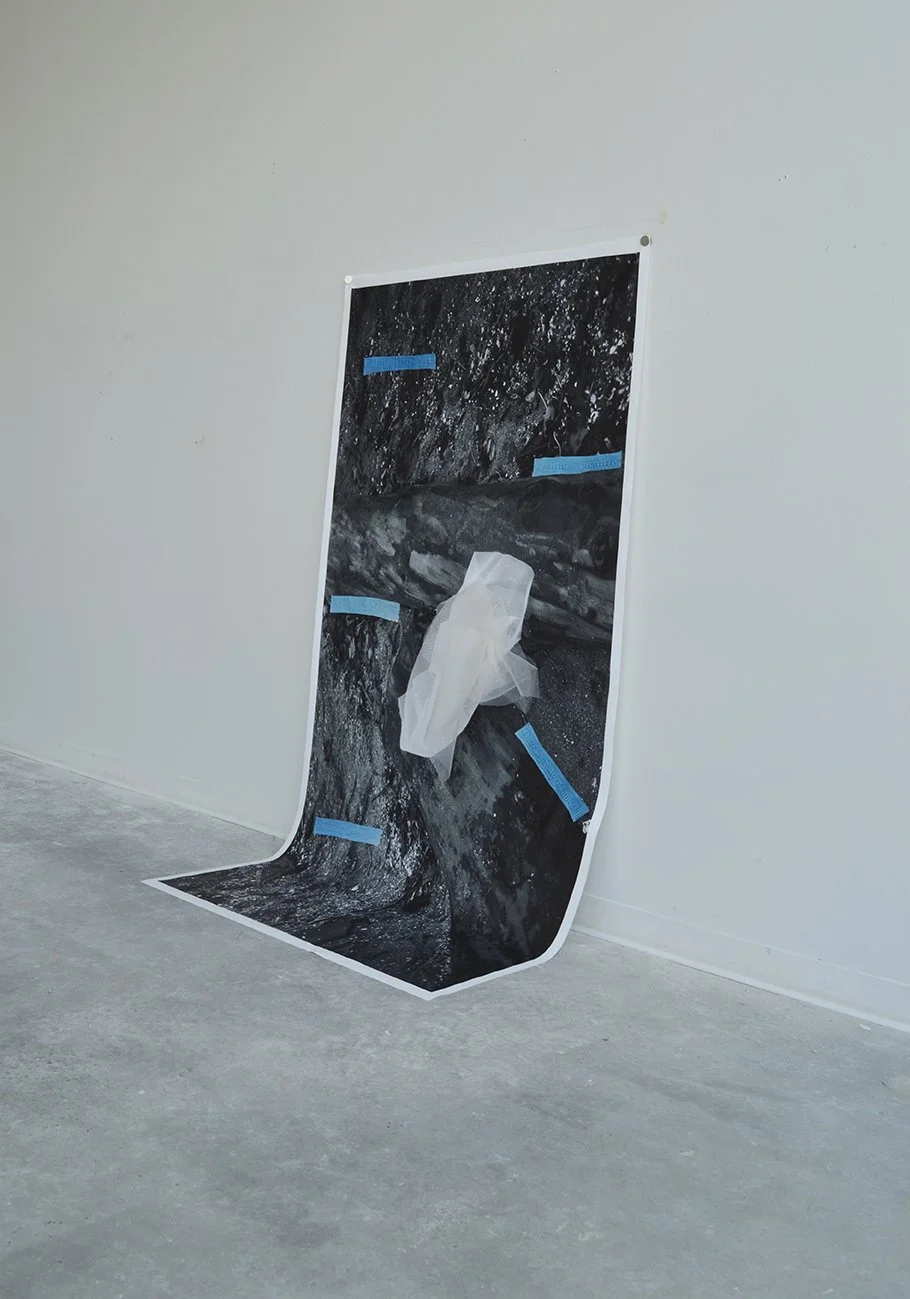
But that’s to say, I was really proud of my banner series, which has a really long title—places you've gone, people you've met…. That's my physically largest work to date. Each banner was four feet by seven feet long. I do want to start getting back into working on a large scale like that again; so yeah, I'm proud of that.
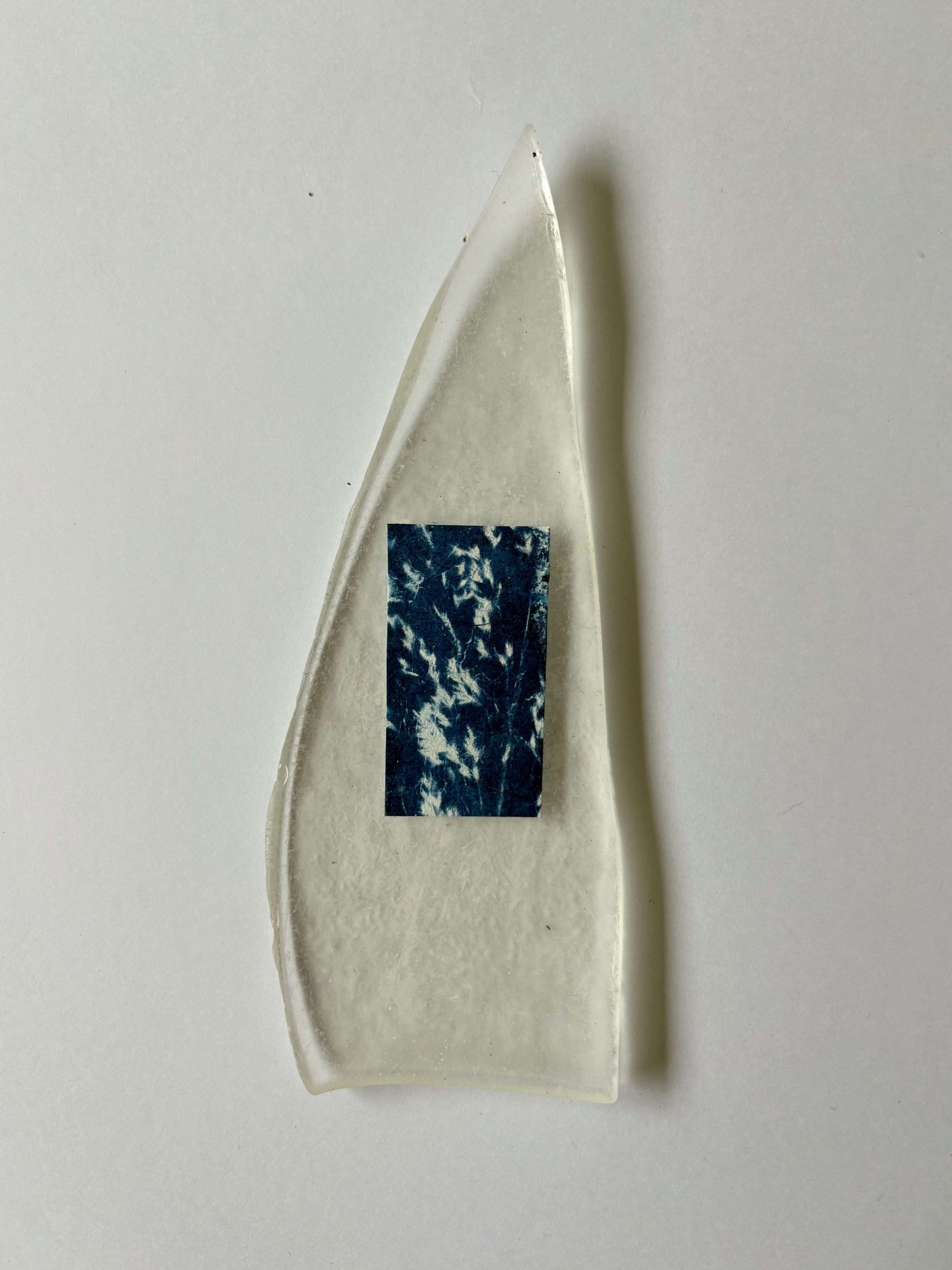
I've also been working on my Iceland series. I'm going to butcher the name because it is Icelandic—leitandi, it means searching—which is much smaller in comparison. But it's all of those works of mine that are cyanotypes on found objects, which I made during my residency.
I spent lots of time there walking and sitting by the water and just being, but then also collecting all these different objects and natural materials. I use those materials to make the cyanotypes, and I adhere them on the objects.
I feel like it gives a little intimate glimpse of where I was in that environment. There’s a juxtaposition between these hard, abrasive materials—like the rusted metal, a big piece of plastic that looks like glass—with the delicate images that are on the cyanotype. You have the delicateness of flora and fauna and then these hard edges. It mimics the landscape of Iceland itself, from afar, it is obviously gorgeous and stunning, but when you look at what it's actually made of—rocks and lava and all these abrasive things, powerful winds, strong waterfalls, there is an interesting contrast between its beauty and the roughness it’s made up of.
Q: When were you in Iceland?
I was there last August in a village called Stöðvarfjörður, and I was in Iceland in 2023 in the springtime in a town called Seydisfjordur.
Q: Are you building on your last body of work from when you were in Iceland? Or is this a separate series?
I was doing cyanotype when I was in Iceland the first time as well, but I feel like they're kind of separate.
The video is different too—it’s a Super 8 video I recorded when I was by the water over a few different days. I've written a short poem, and it's going to be more of a stop motion video, because I'm taking different frames and then layering them with the text.
Q: Does poetry play a big part in your practice?
Yeah, I think it definitely does.
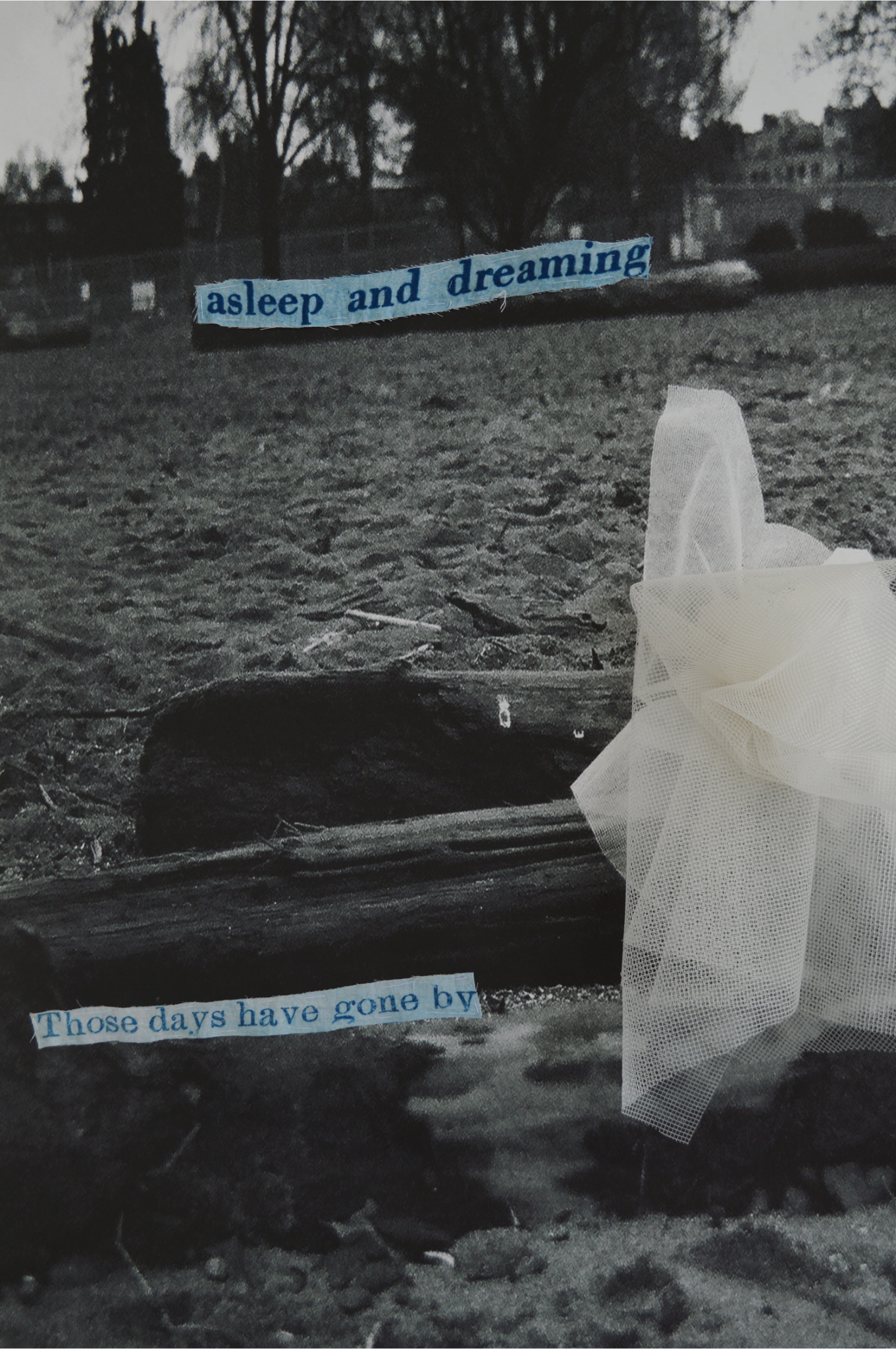
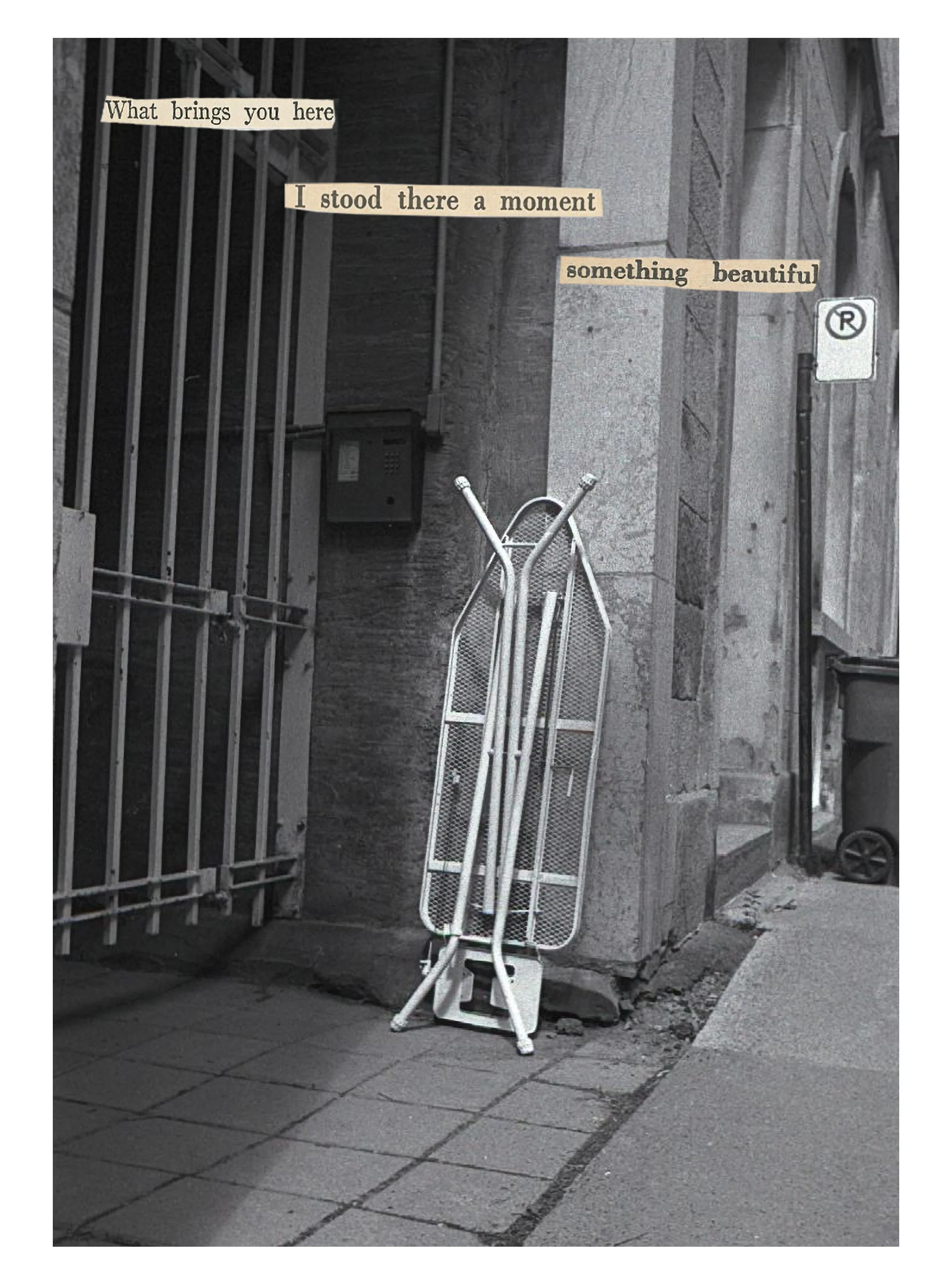
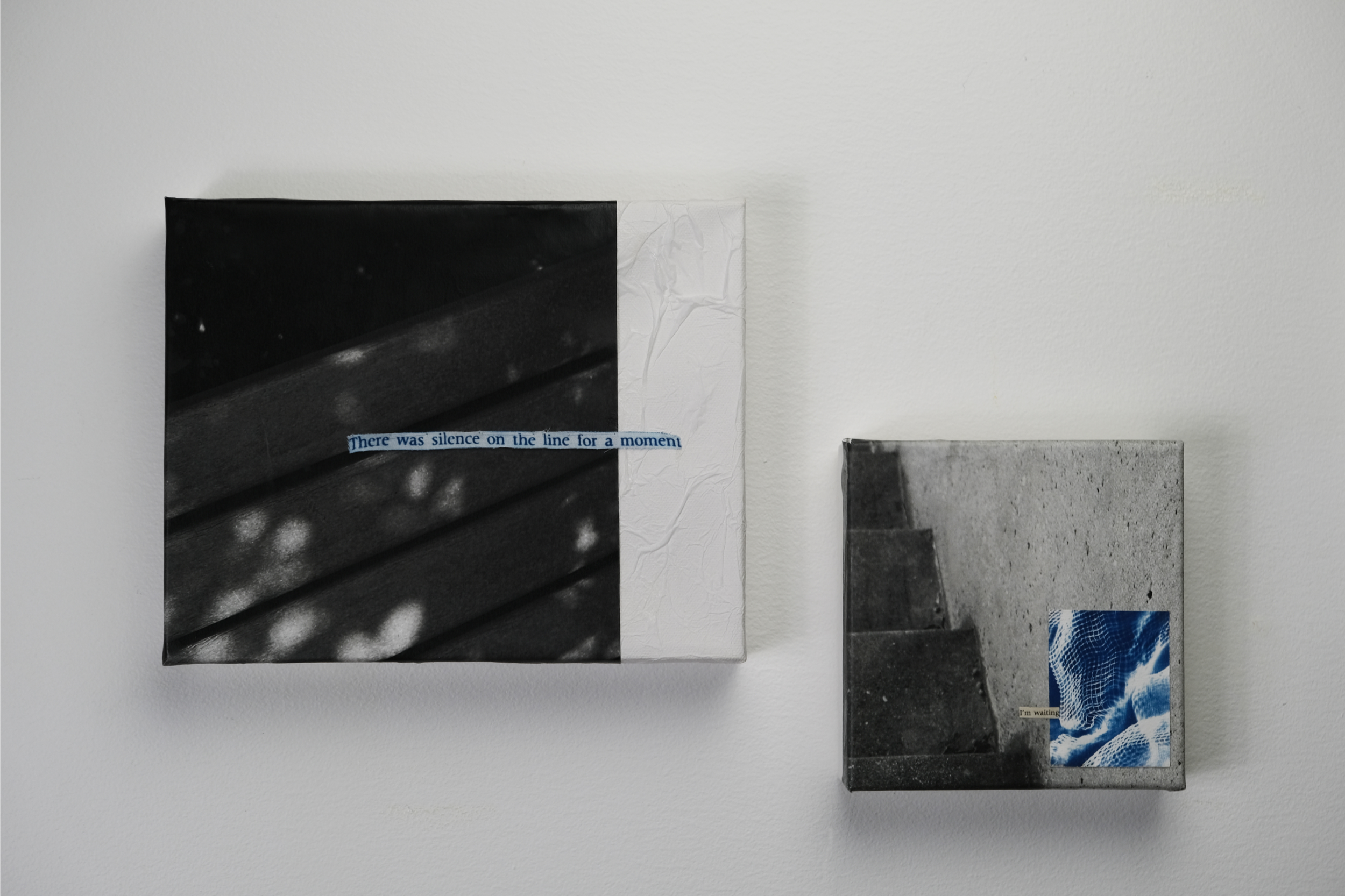
All the poems I write are cut-out pieces from old books that I've thrifted or that have been given to me. I’ll often collage a single piece of text onto one image that's read as part of a series, or place multiple pieces of text onto one image. I do write them with specific instances or moments in mind—it comes from somewhere—but I like that the way they’re expressed is somewhat ambiguous.
Someone can read into it in a certain way or project their own feelings and experiences onto it and get something else from it. I think the relationship between text and image is always interesting, because when you see text in an image, you assume they’re intertwined. In my case, they are, but they're intertwined in more intimate ways to me, because I know what happened there and why I placed the text. Someone else might look at it and build an entirely different narrative in their mind, and I like the idea of that too.
Q: Has poetry always been involved in your creative process, or was it something you added later?
Honestly, I think it was maybe my third year of university. I took a class, and I don't even know why I necessarily had the idea to collage, but I had taken all these surreal photos with this mesh that I work with and collaged words over top of them. I really liked doing that, because I wouldn't say that I'm a writer or necessarily even a poet—but I do like putting pieces together.
By using the cut-out text, I can almost—not hide, but kind of hide—behind the fact that I didn't fully write it. I see it more as assembling pieces together. It feels a little less vulnerable than actually writing a poem, even though I do view the assembled text as poems.
Since that first instance in school, I’ve integrated text in different ways, whether it’s collaging words from books directly onto images, making cyanotypes with text, or using them in videos as well.
7. Do you see yourself staying in Winnipeg long term, or are there other cities that inspire you to work there?
Well, I'm originally from Vancouver, so I think the opportunity to return to the West Coast, even if it's just for a short period of time, would be really lovely. I feel a strong pull and desire towards the ocean, and I enjoy the idea of collaborating with it in future work. I have a lot of strong, fond memories of being in and by the water.
As we’ve talked about, I've also been fortunate enough to be to Iceland twice—once for a month-long period—and I would love to return and spend even more time there. I just feel so at peace in that environment. I feel so calm. I feel so inspired.
Realistically, though, I do think I will end up settling in Winnipeg long term for the affordability. I can have a studio here; I can have a life. The art scene is also great here for the size of the city, and it very much feels like a community—and I really like that. It feels very supportive, and that makes it a really desirable place to stay.
8. Do you think your practice would look different if you were based in another city?
I think if I were based in another city, my practice would change—I don't think aesthetically, and maybe not even thematically, depending on where I was—but more in a material way.
If I imagine living in a larger city where having a studio is less affordable, and where I’d be living and working in a small, cramped apartment, I could see my work maybe shifting. Even though I'm not working that large right now, I could imagine transitioning to even more video and things that are more transportable or transformable.
But right now, I have the space and opportunity to take up or not take up as much space as I want, and I like having that flexibility.
9. What would you like to accomplish in the next few years?
I'd like to go to grad school in the next few years. I'd like to have a solo show, and I'd also like to start working on a larger scale again. I'm interested in combining photo and sculpture, so maybe doing large-scale photo-sculptural work, or even installation.
Yeah, I want to work big. I want to be doing big things.
10. If there's one thing you hope people take away from your work, what would it be?
I feel like I'm always so bad at picking just one thing.
But I hope people take away a softness or stillness from my work. I don't know if that really makes sense, but like how we talked about the poems I write with my images, they’re meant to feel like intimate glimpses into memories or lived experiences. When I make a work, I envision people encountering it in a quiet, contemplative moment, and having a reason to slow down and pause.
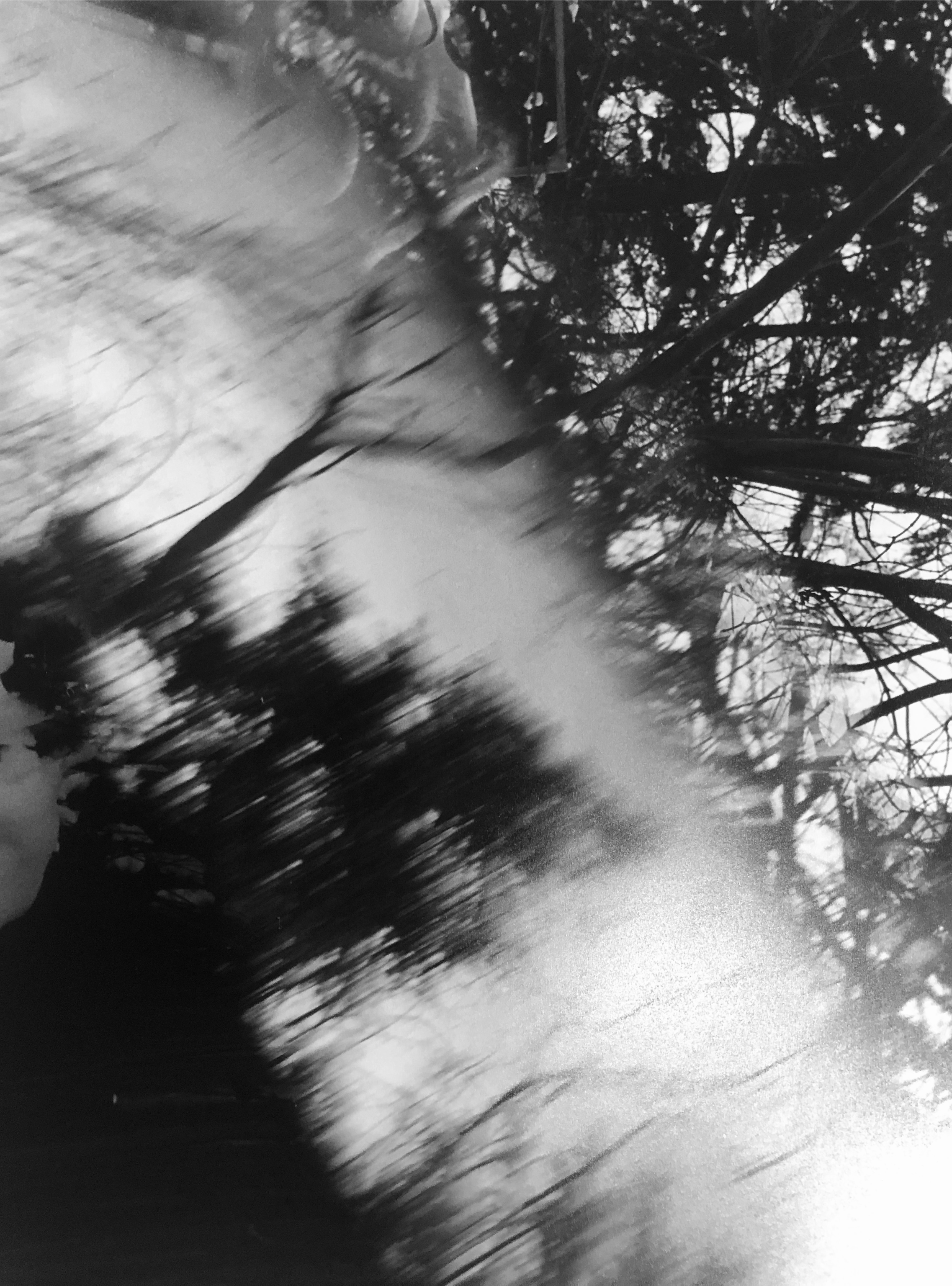
Sometimes the landscapes that I photograph are abstracted, they’re zoomed in or not immediately identifiable. I think that makes it easier for someone to step into the work. For example, there’s a recent piece of mine that shows a shadowy bench. I know exactly where it was taken and why, but someone else looking at it might have their own memory of sitting on a different shadowy bench. It doesn't matter that it’s not the same place this was taken.
I hope that through the text and my images, I create a space for viewers to reflect on their own memories and relationship to landscape, whether or not they have a relationship to the same landscape I have depicted.