
THE INTERVIEW
Adelle Rawluk
1. Could you share a bit about your background and what led you to start your art practice?
I've been creating for as long as I can remember—drawing, inventing worlds, putting things together and taking them apart.
I first started painting when I was eleven. At the time I had no idea how to go about it—how to go about making art or what it meant to make art, other than that it was something I felt drawn to and really inspired by. It wasn't until I was in high school that the concept of art as a study and a practice became something that was a real possibility, a real avenue.
It wasn't a reality that I was aware of, I wasn’t exposed to it much. My parents come from the world of science.
As a teen, I did have the guidance of a fantastic art teacher who really inspired me to push the boundaries of what I could do and learn. It was this teacher—and the introduction to the artist Diana Thorneycroft when I was in high school—who later became my mentor, and they were the ones who advised me to pursue fine art in further studies. If it wasn't for them, I wouldn't have even known it was an option. It has since become my main drive and focus—this desire to maintain a career as a practicing artist.
2. What themes does your work explore?
Growing up, my childhood was largely molded by stories of real life—small town interactions and the teachings of a Ukrainian Catholic upbringing. Despite growing up in Winnipeg, my early life was filled with a lot of time outside the city and listening to the stories of my parents, grandparents and their parents before them.
My own family histories are largely lost or forgotten. A sort of patchwork of identity was crafted by experiences and things that were gained from the places they lived, the people they met, and the communities that they were part of. With that came an interest in what's been lost, what was forgotten, and how place can carry both new experiences and ghosts.
My work explores broad themes of memory, identity, and mourning as well as longing—largely captured through a prairie lens. I aim to capture the harshness of the place that we call home, the personal histories that we use to craft our own identities and how they can be lost in time.
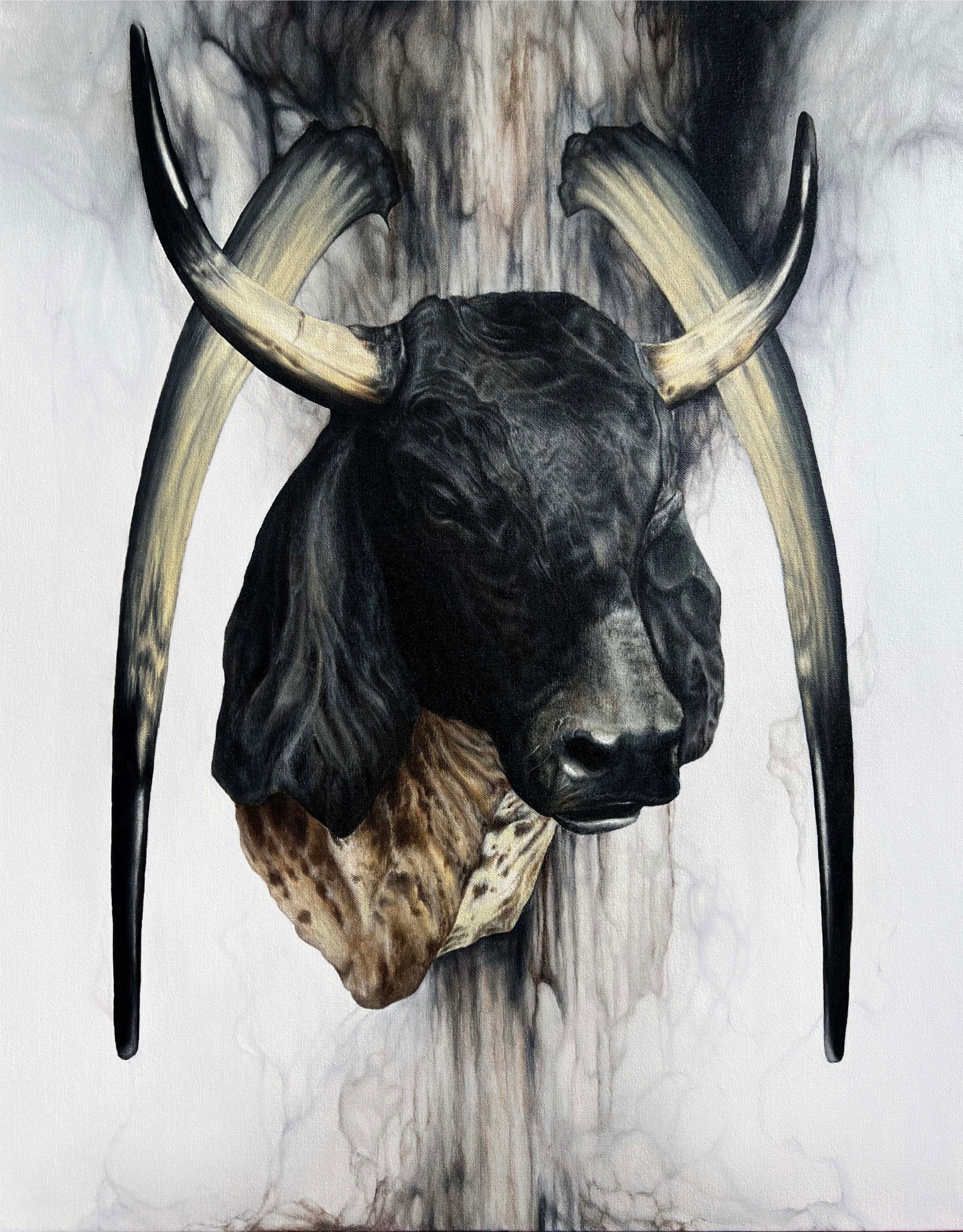
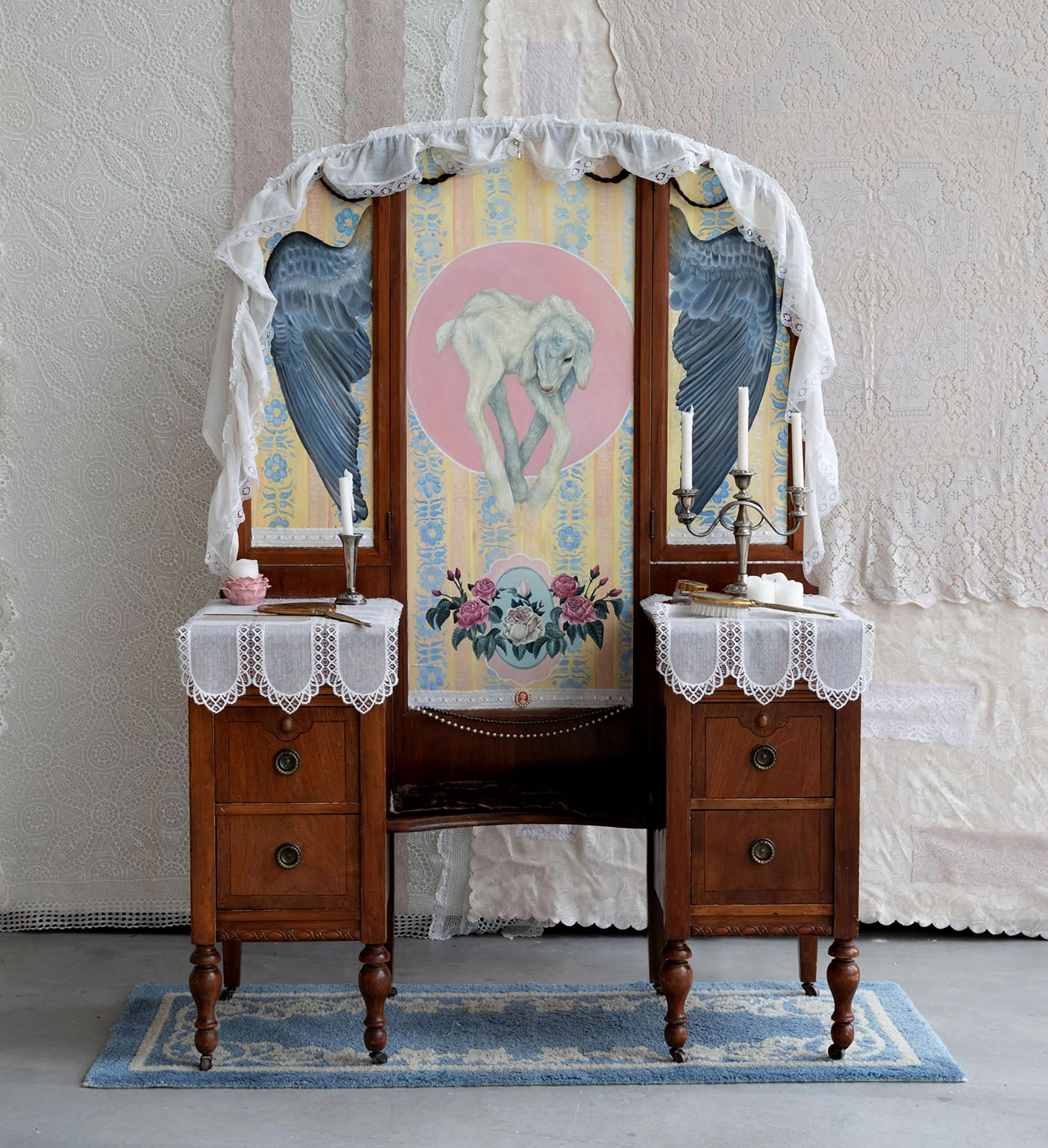
I use oil painting in conjunction with found and shared objects—collected locally—to create icons or portraits of scenes and things that embody this lost sense of meaning. I create pieces in which meaning can be found in the lack thereof. In my work there is a lack of visual human presence. Instead humanity lives in the things that are left behind.
Within my work there is a prairie focus and a strong sense of place. For me the prairies bring a gesture of heartiness and resilience that is reflected by the harshness of the landscape and long dark winters. The vast expansive horizon and largely agricultural community that makes up this province is a key source of inspiration; scattered communities spotted with moments of abandoned structures and forgotten places.
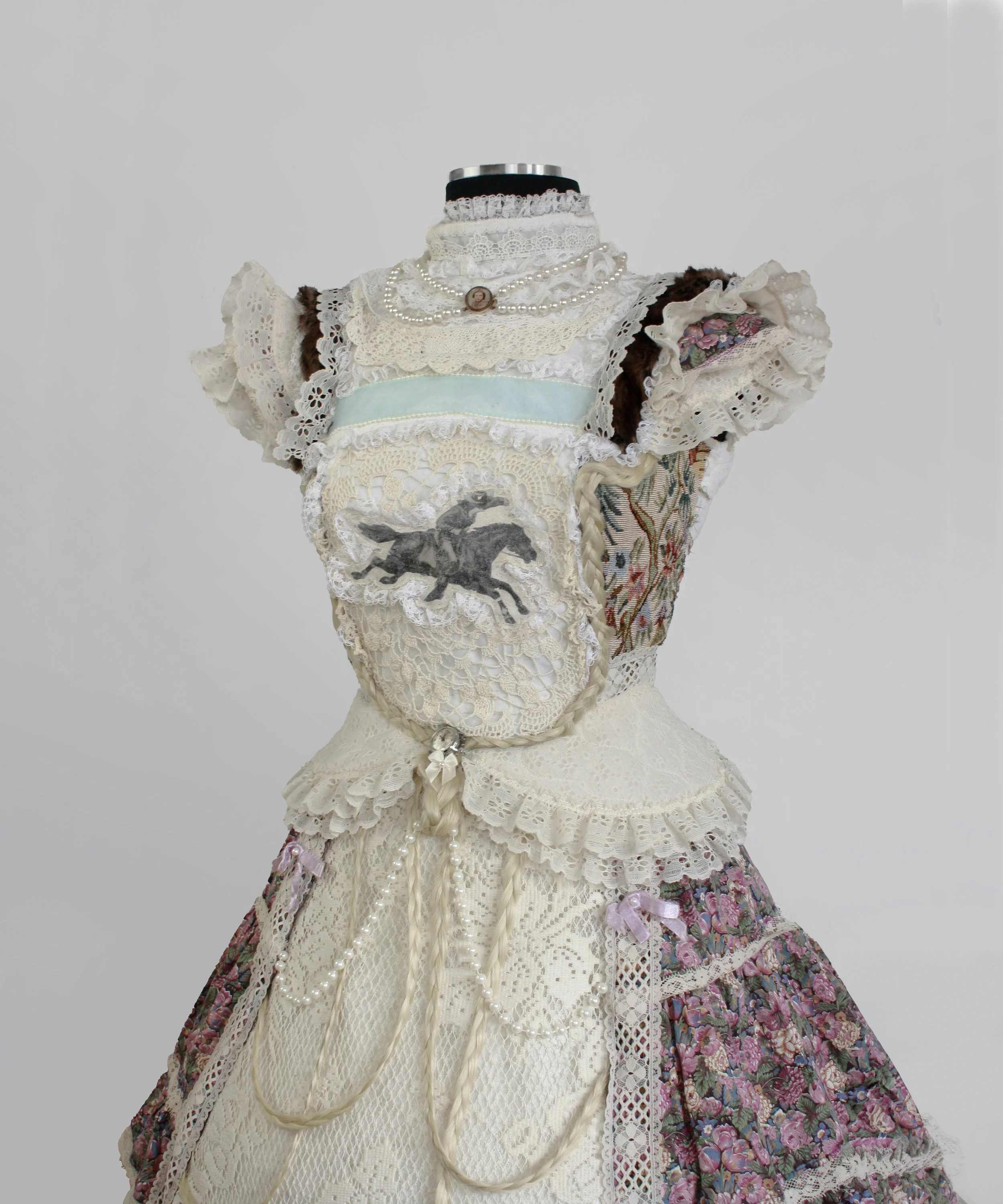
I like to use old furniture, house fixtures, elements of the vernacular in craft work, and forgotten objects and trinkets from abandoned structures to help build and compose my work.
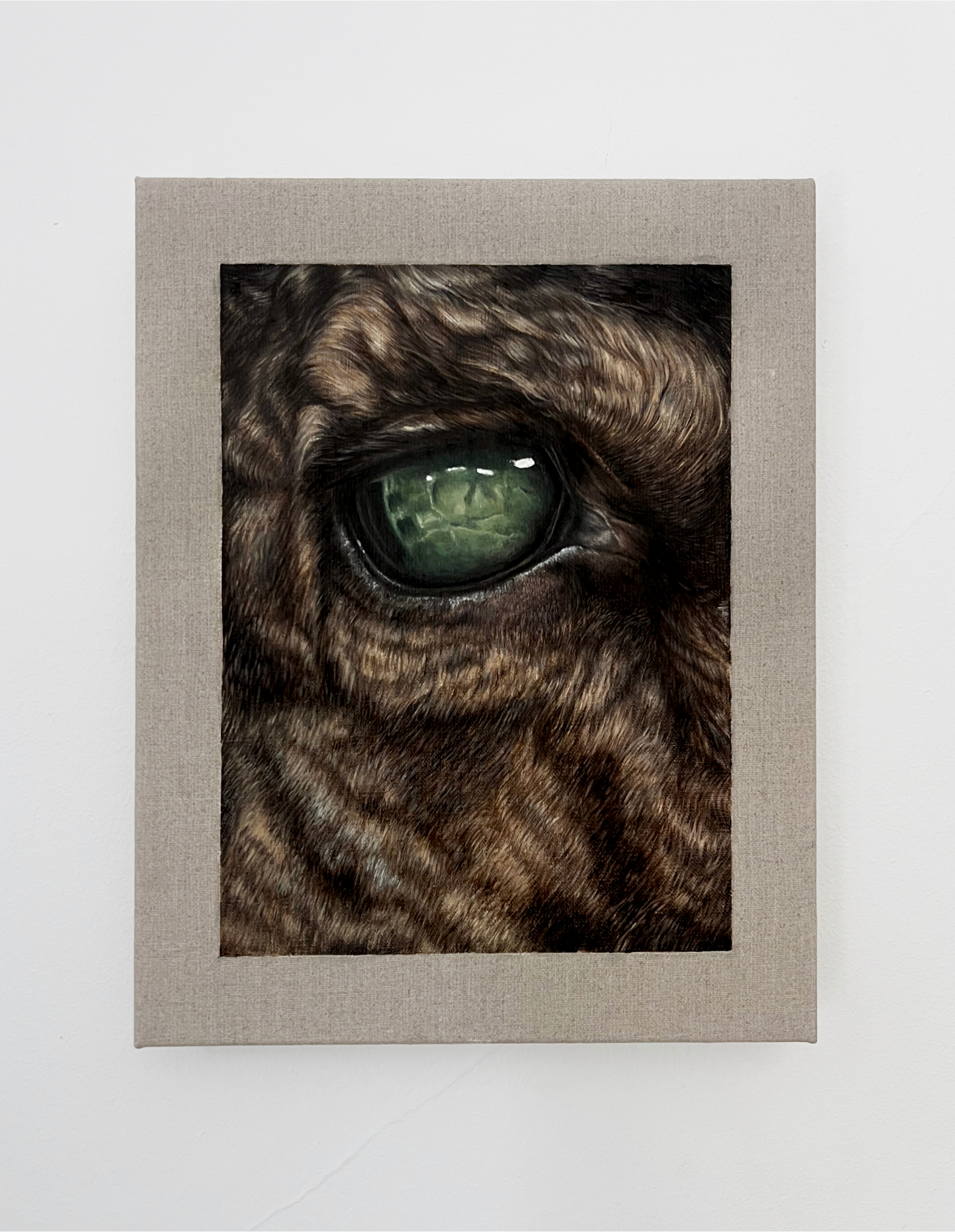
I present them in combination with familiar figures of the landscape—in this case animals: domestic, livestock, wild game, as well as taxidermied figures. They become representations of the thoughts, feelings, presence, and lack thereof, of lives unknown or forgotten. I like to use these animals as reflections of our own hardships and experiences—symbols of stories, lives, and subjects of memory.
3. How has your work evolved over the years and what has influenced those changes?
The subject of my work has been memory for a long time—at least centred around memory—and a sense of uncomfortability in understanding how easily things are lost. A lot of my earlier work focused on the body and distortions of the body—trying to capture a sense of discomfort and change that comes with time. At the time, this work was very introspective—a reflection of my own personal experiences more than trying to define the world around me. I was seeking to define this inability to control whether things are being lost and how that made me feel.
During my time at the School of Art in the later years, I focused on creating works that captured objects—how ordinary and mundane things can become important and precious just by the meaning we give to it. My work from this time was very focused on objects, harnessing a strong influence from iconography, shrines, and reliquary items. It was characterized by a search for a sense of the sacred and the secular through the meaning we give to objects that would normally be deemed ordinary.
It has since evolved into a focus of more recognizable figures and a specific lack of human presence in the shared experiences that accompany life on the Prairies. I've been seeking to harness memory and presence through representations of the things that we see and experience, and the things we leave behind. Instead of a search for the lost and the sacred, I aim to channel human reflections in the lives and things that surround us, with a focus on memory as living within the living.
4. What is the biggest source of inspiration for your work?
For me, a lot of it is in the things around me—histories of places, things, stories from the people and the places that surround me. I'm really interested, from a technical standpoint, in Flemish Gothic painting—the softness, detail, and slight sense of the uncanny that exists in works from artists like Jan van Eyck, Peter Paul Rubens, and Roger van der Weyden.
I'm really interested in that stark contrast between subject and background, and how it leans into the iconographic. I'm also really vested in ready-mades and how easily the meaning of objects can become transformed. Also, archival work and historical records of places, things, and buildings—how collecting these things, whatever they may be, can become so closely tied to personal identity.
5. What is the most challenging stage of the creative process for you and why?
The beginning—choosing how I want to represent a specific kind of concept or idea, and the end. I find that it's difficult to figure out how I want it to be displayed or how the display of it might affect interpretation.
For me framing a piece is a really important part of the process. How to frame it, what to frame it with, what the frame should look like… It’s how the viewer is introduced to the piece. I find choosing what to display around or with a painting to be something that takes the most time and planning.
Q: Do you create the frames yourself? Where do you find them?
I often source second-hand or ‘found’ frames, or repurpose building materials and textiles to create new ones.
In the case of found frames, the painted imagery is composed to suit the frame. The Image is defined by the frame in which it will be housed. In other cases, a frame will be built to suit the painting. In these situations, the materials from which the frame is constructed are selected to function as a continuation of the piece.
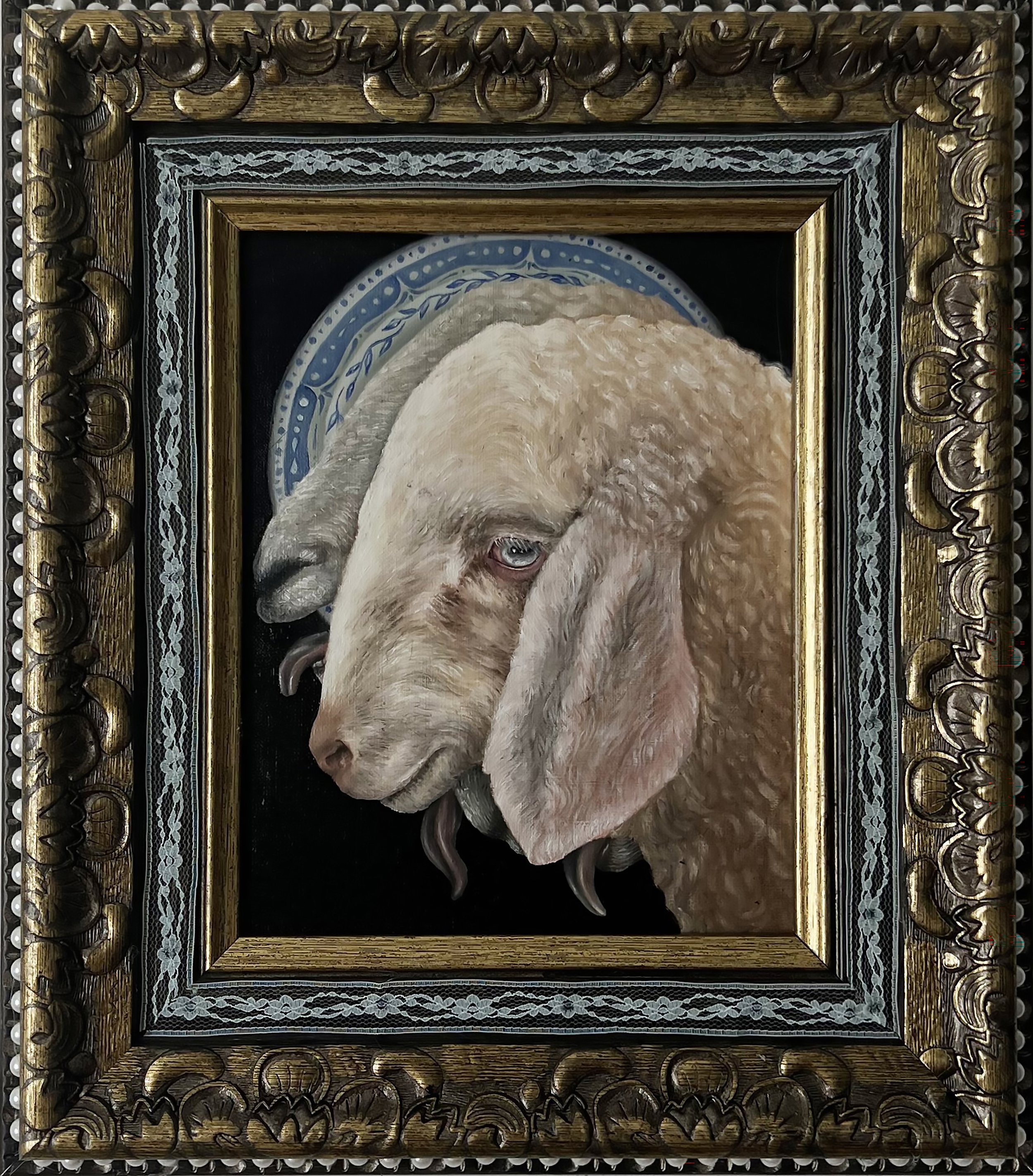
For example, the piece Remembering (Blue Eyes), is encased in a salvaged window frame from an old prairie farm house that I had taken apart and rebuilt to fit the painting.
6. What is the project you're most proud of to date?
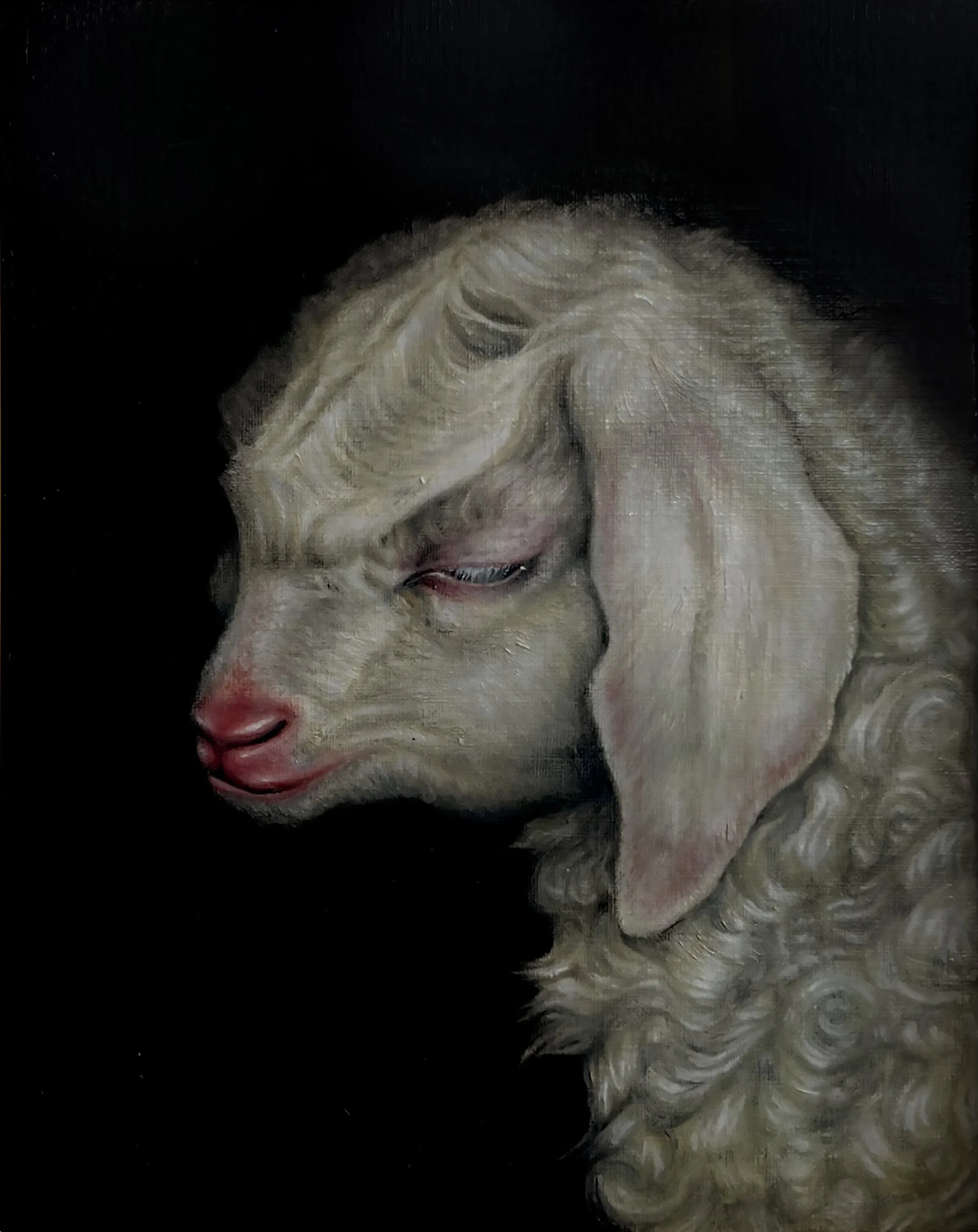
It's a painting called Remembering (Blue Eyes). It's a large portrait of a pygmy goat. It’s oil on canvas—a sort of surreal distorted approach to the decay of a moment in memory. It’s framed with a salvaged window frame from an old prairie farmhouse.
I just completed this piece a couple weeks ago. I'm very excited about it. The likeness of the goat was shared with me in the name of remembrance, by a farmer who had lost her, Blue Eyes, during a difficult delivery. This piece captures the preservation of a moment through the act of remembering.
For me, it embodies everything that I'm trying to say with a lot of the new work that I'm creating. There's a focus on the power of memory to shape and transform moments that are frozen in time, and the power of a frame to create action. In this case, one of literally and figuratively looking in or looking out.
Q: Do you work a lot with farmers in your pieces where there’s images of livestock animals?
I attended an artist residency with the Harvest Moon Society in Clearwater, MB last year, where I spent a lot of time with farmers that live and work in and around the Pembina Valley.
My mother grew up around livestock and worked with agricultural researchers and farmers. Growing up, I spent a lot of time around and learning about agricultural practices within Winnipeg and the surrounding areas—through my mother, extended family in rural communities, and other people I had met along the way.
7. Do you see yourself staying in Winnipeg long term, or are there other cities that inspire you to work there?
I don't know where this life will take me or where I'll end up.
There's no denying that I want to travel and spend time in other places, but I do feel that wherever I go Winnipeg will always be home. There will be other places that are inspiring and fantastic and amazing, but they won't be home.
There's something that is grounding about this place. I’ve found that many Winnipeggers will tell you the same. There's a strong connection to this city—I think largely fostered by the complicated relationship that a lot of us have with it, though not without a strong sense of pride.
Winnipeg has a strong community of kind and creative people with a lot of original ideas.
8. Do you think your practice would look different if you were based in another city?
Yes, absolutely.
So much of the work that I make is shaped by my experience of growing up and living here. No matter where I went, I think I would still be searching for ties to home and lines of communication towards the parts of this place that shaped me.
It is important to bring in new perspectives and new ways of looking at things by going to other places, but I personally feel there will always be a part of me that searches for home.
9. What would you like to accomplish in the next few years?
I will keep making art, working on growing and developing my body of work. I want to pursue exhibition opportunities and present my first solo show. I want to participate in artist residencies out of province and/or abroad.
I intend to continue pursuing opportunities to build and develop my career as a practicing artist.
Q: Do you have anywhere abroad that you're looking at for residencies?
I would really love to do a rural residency in Europe. There are several residencies based in smaller communities that revolve around agricultural settings and tight knit social settings.
I am interested in spending time in Brussels, where so many of my artistic influences come from. Although I believe that doing a residency anywhere would bring so many valuable experiences.
10. If there's one thing you hope people take away from your work, what would it be?
At the end of the day, my work exists to allow people to take what they want from it, what they're looking for. I hope it creates a moment of introspection or a search for something within themselves, but I also do hope that—especially with the work I've been creating recently—that people find a sense of home in it.